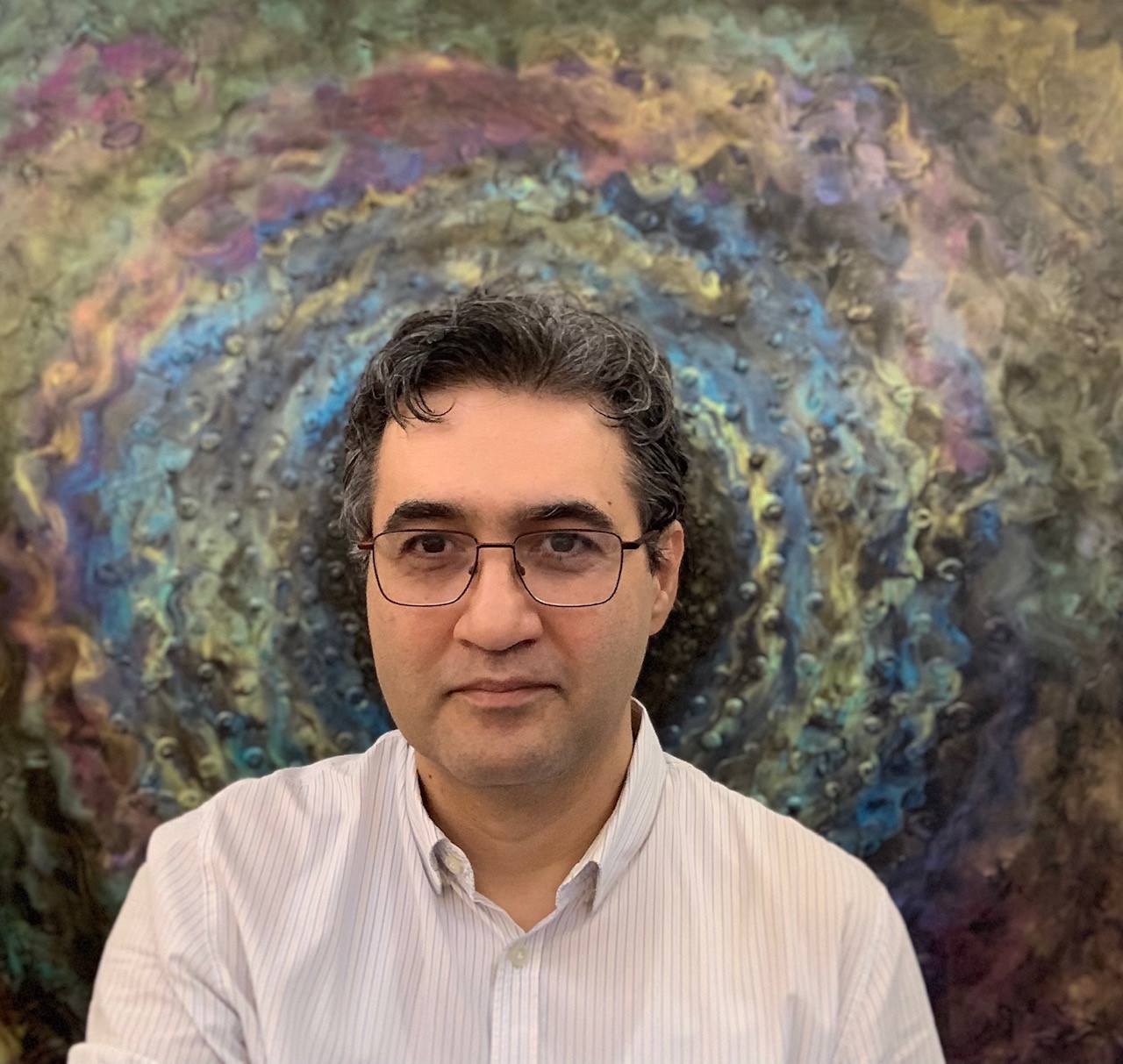
Paulo Coelho: [The Gaze of the Gazelle] an Important and Life-Affirming Memoir

On 20 June 2009, a brief video clip was circulated all over the world. It showed the death of a young, unarmed woman called Neda, who had been shot in the chest while taking part in a protest in Tehran and was bleeding to death on the street. Few images in the contemporary world have had such an instant and powerful impact. This footage was so intense it raised the awareness of the world on what was happening in Iran and forced world leaders to condemn the way the Iranian government was treating its citizens.

For me, however, it was more personal. There was a young man in the video trying to save Neda. He was my friend, Arash.

When I met him for the very first time, I could never have imagined that this slim young man would get caught in the crossroad of history ten years later. Even if I had the power to look into the future and see that this passionate doctor-publisher-author was destined to be present in one of the most important documents of contemporary history, I couldn’t have imagined the way he would react to it. I couldn’t have imagined that he would have the courage to testify against an unspeakable crime, and be prepared to forsake everything to expose the truth.

I met Arash in Tehran in 2000 when I visited Iran. Arash was the Iranian publisher who, despite the fact that Iran has not signed up to any of the international copyright agreements, had made the decision to publish my work with my authorisation.

I was in a state of confusion when I met him. Finally I was in Iran, and while I had been looking forward to visiting Iran for some time, I had no idea what to expect. I didn’t know what the implications of my visit were going to be, or if Christina and I were in any kind of danger. However, I had made the decision to venture this visit; I already knew that I had thousands of readers there waiting for me and I was ecstatic at the thought of seeing the land of Rumi, Saadi, Hafiz and Omar Khayyam.

Read the rest of the article here

Two feedbacks from Italian readers of The Gaze of the Gazelle (Negli occhi della gazzella)

Your book hit my the soul…

Sorry but I write with translator, my name is Romina, I am writing from Italy (ancona-marche). I read the book In the Eyes of the Gazelle (the Gaze of the Gazelle: Negli occhi della gazzella), it was so beautiful!
I tried to understand better what you meant, jihad, Basij, imams, mullahs, jinn, Shari’a, Tudeh and other terms … I have seen many pictures, women with hijab, your wonderful mountains, the lights of Tehran in the evening, the moon, the stars, Iran is really a beautiful world!
I found pictures of Neda when she died, and I have them saved on my PC, sometimes I look at those beautiful eyes that only the Iranian women have … Her smile is forever caught in the middle, then it’s your book, which hit my soul, I would like to thank you for the gift that you gave me, your story, your writing about your life, your emotions … I can never forget!
I thank you very much for what imprinted on my heart!
I’m talking to my friends about your work, I would like to share this excitement with them!
I hug you my friend!
with great affection
Romi

Thank you for making me appreciate my freedom…

Thank you Arash, I want to thank you for making me appreciate my freedom to be and do whatever I want and feel. Thank you for letting me know lot of things about your beautiful country. Thank you for letting me know about the story of your country, of its culture through the innocent but critic eyes of a little smart boy, of an adolescent and of a young man as you was and I am. Thank you for letting me knowing Neda, the Voice of freedom. Last but not least thank you for letting me cry, on a plane, reading the last page of your beautiful book “The Gaze of the Gazelle” just few hours ago, reading words of hope for the present.

Nothing personal just wanted you to know how much you impressed me with your words. Again thank you

Damiano


s

Your book hit my the soul…

For Neda: The film: Tuesday 21 June, 10.00 PM on More 4 (UK only)

On 20 June 2009, Neda Agha Soltan was shot in the heart by a sniper and lay bleeding to death in a backstreet of Tehran. Within hours of her death this young Iranian woman’s dying moments, captured on mobile phones, were appearing on computer screens across the world.

Anthony Thomas’s film tells Neda’s personal story and attempts to find out who this young woman was, how she became a powerful symbol to millions and what she was fighting for.

The film not only shows the plight of the Iranian citizens who peacefully fought to free their country from its current government regime, but also the ongoing struggle the women of Iran face every day in an attempt to live a life free from oppression.

The only way to get to the heart of the story was to work inside Iran, at a time when foreign film-makers are forbidden entry, and Iranians themselves risk arrest and long-term imprisonment if caught filming without official approval.

The film won the Foreign Press Association’s Best TV Feature/ Documentary Award and was among 2011′s Peabody Awards winners list.

Read More

Arash Hejazi’s Interview with the Italian Magazine Io Dona: I can’t live in silence, Neda’s eyes hunt me

“Non posso vivere nel silenzio, gli occhi di Neda mi perseguitano”

Dal suo rifugio a Londra parla ilmedico che cercò di salvare la studentessa-simbolo della rivolta iraniana. E che trovò il coraggio graziea Paolo Coelho

di Emanuela Zuccalà, Io Dona, 20 May 2011

UNA RAGAZZA A TERRA, il volto percorso da rivoli di sangue scuro. Due uomini tentanodi rianimarla. Uno urla: “Resta con me!”. Le grida della folla crescono tragiche e confuse. Era il 20 giugno 2009: a Teheran milioni di persone manifestavano contro i brogli elettorali, che avevano portato alla vittoria del presidente Mahmud Ahmadinejad sull’avversario riformista Mir-Hossein Mousavi. Neda Soltani, 26 anni, studentessa di Filosofia freddata da un miliziano, diventava il simbolo dei giovani iraniani affamati di libertà. La sua morte in diretta, ripresa da un telefonino, si diffondeva per il globo attraverso YouTube: un documento eccezionale, che rivelava senza filtri la brutalità del regime iraniano. A metterlo online era stato lo stesso uomo in camicia bianca che nel video cerca di salvare Neda. E che adesso siede di fronte a me in un appartamento di Londra.

Read  the Rest of the Interview Here

Arash Hejazi’s interview with his shadow

“If I have decided that I should write, It is only because I should introduce myself to my shadow–a shadow which rests in a stooped position on the wall, and which appears to be voraciously swallowing all that I write down.” from The Blind Owl, by Sadeq Hedayat.

I am having a very sincere and straightforward interview with my shadow, or he is interviewing me; the excuse being the imminent release of my memoirs, the Gaze of the Gazelle. This is neither stunt or satire; but an attempt to organize my never-ending internal monologue and controversies. I’m trying to gain the courage to ask myself the questions I have always had in the back of my mind, but never dared to answer. No interviewer in the world could find out about these darkest corners of my mind and ask the relevant questions, so the task is up to me. Why made it public, I want witnesses, so I can’t deceive myself. This is going to be a very long interview, in my attempt to rediscover myself.

An interview with my shadow, or my shadow’s interview with me

29/03/2011

Q: You are only forty. Isn’t it too early to write your memoirs?

A: A phase in my life is over. Yes, it might be too early, or not. I’m one of those people who, unlike many others, wish they could live forever. I have never had a death wish. But on 25
But I couldn’t live in the purgatory, nor could I give up my past. A man without a past is a man without feet, and without feet, how can you walk towards your future? You can crawl, maybe, as the mind, this brutal sponsor of the journey, will not equip you with wheelchairs.

I wrote my memoirs, so I could always remember, and even if my memories started to fade, there would be people who would read my memoirs, and there could be a few, who would keep my memories, which are the memories of a generation, alive. Then I could move on. I could start living again, without the fear of losing the past. I could enjoy my surroundings, the new way of life, the new language, traditions, or the modernity.

Q: But REALLY? Is this the only reason you wrote them?

A: I was sad. I was extremely sad. I had to do something. I thought if I went through everything again, I might find something that would help me keep going on. I was lost. I had to go back to the beginning, to see where I could find my Ariadne’s thread again.

Q: And did you find it?

A: I definitely did.

Q: And what was it that helped you?

A: Rocky Balboa.

Q: Rocky, Silvester Stallone?

A: Yes.

Q: How?!

A: It was the first smuggled film I saw on the video-player we bought from the black market. I was 15, and I had lost my way then, too.

Q: And how did Rocky help you?

A: It might sound ridiculous. After reading tons of high-bro literature and pearls of wisdom, Rocky was the only one who really helped me. I watched and watched, I don’t know how many times. I became angry that Apollo won the match on points, although Rocky had fought so hard, until I discovered the truth. It wasn’t the winning itself that Rocky was after. Not being knocked out for one more round was his ambition. That was what I had to do. I had to make sure that I wasn’t going to be knocked out. What happened after wasn’t important.

Q: Ok, so you dug into your past on a self-rediscovery journey. But why do you think the world needed to know about your journey?

A: It wasn’t only my story. It was the story of my generation.

Q: And who made you the representative of your generation?

A: No one. But I had the means to tell the story. I could write, I could get it published. When the my current agent approached me, I was half way through the book, and then I thought, ok, the world had seen the videos, the news headlines, and photos coming out of Iran during the protests, they had been shocked by the eyes of Neda staring into the camera just before she died, but they never had the chance to really understand what was happening there. What was it that took those young men and women into the streets, ready to give up their lives. It wasn’t just because of the rigged election. There was a story behind those eyes, and I felt compelled to write about it, and I felt that I owed Neda to tell the story of our generation.

Q: And you thought you were the right person to do it?

A: Yes. I believe in myself. I love writing and no one can stop me from writing. After speaking up about Neda, the government of Iran seized my assets, shot down my publishing house in Iran, banned my books, prosecuted me, and tried to accuse me of treason. But they couldn’t stop me from speaking up. They couldn’t stop me from writing. And I had to make sure that I wasn’t going to be knocked out in this round. The rest was up to the publishers. If they liked my book, they would go for it. If not, at least I hadn’t been knocked out and I was ready for the next round.

Q: But tell me the real reason.

A: Why don’t you stop repeating the same question over and over again?! I told you the reason.

Q: Yes you did. But what’s the real reason for someone at forty, sitting down and writing about his past.

A: OK, I was bleeding. I was wounded. The bullet that pierced Neda’s chest took her life away, but ripped my life apart. She stared into my eyes and died. She couldn’t say anything. But it was as if she was telling me: ‘Do something!’ and I couldn’t do anything. Those eyes are following me wherever I go. Those eyes keep my heart bleeding. I lied when I said that memories fade away. Some don’t. A few years ago I saw the film Memento by Christopher Nolan. There, Guy Pearce has lost his short-term memory after a blow to his head, during an attack on himself and his wife, during which his wife is killed. The last thing he remembers is the look on her wife’s face, while life is slipping away from her body. From then on, his brain cannot keep short-term memories, so time does not pass from the horrible moment. The memory doesn’t fade away, so he can’t heal.
I couldn’t heal. The memory of those eyes did not leave me. They haunted me, asking me to ‘do something’. I spoke up about her, thinking that she will leave me. I talked to BBC, The Times and other media, when I realised that the Iranian government was trying to conceal her death and then blame it on foreign service. But she still didn’t leave me. I had to do something else, or else I would have bled to death myself. So I wrote, and when I wrote, I felt better, and the eyes became kinder, and the bleeding stopped whenever I resumed writing. She wanted me to tell her story, the story of the generation, she wanted me to tell how it came to that moment… I wrote, because I was in pain, and telling the story eased the pain.

Q: What do you miss most about your homeland?

A lot of things. The desert for one thing. I miss the burning sun and the yellow sands, I miss watching the horizon and spotless blue sky, where I felt I was part of a magic. Where at nights you felt that you could reach the stars just by lifting your hand. An the mountain as well. There are not mountains in England. The view of the mountains reaching the heavens, with all the mystical and mythical lore surrounding the Mountains Alborz, I felt that I was a mythical hero myself. The mountain alborz is the home of the legend of Arash the Archer, the abode of Mithra, the Iranian God of light and promises, and wher the prophet-king Kay Khusro disappeared. Paradoxically, it is also where the embodiment of evil on Earth in Iranian myths, King Zahak, is chained, waiting for his time to be released and devour the world. I miss Alborz a lot.

There other things that I miss, the feeling that I belonged to a society. Here in exile, I am living with the society, but I don’t feel I belong to it. It is like watching a fascinating 3D movie, but no matter how hard you and the producers try to give you a real-life experience, you are not part of the cast or crew, you are a visitor. I miss the feeling of being one of the living cells in a society.

I miss the Iranian jokes as well, I must say. The darkest humour in the world.

Q: This is too cliche. Isn’t there an original thing you miss?

Well, that’s how I fee. the family and friends?

Q: You don’t need to be an exile to miss your family and friends.

I suppose you are right.  Let me see… To be fair, I was a successful author in Iran. I miss my readers, although they still write to me all the time. I miss the Tehran Book Fair, but the government destroyed  the spirit of it a couple of years before I was forced into exile. I think the most important think I miss, is the joy of living in Iran. It’s a fascinating country, and most importantly, you can never know what to expect from your tomorrow. It’s quite different here; everything is predicted, everything is planned for. In the West you live in a democracy, but are ruled by the norms of the society. In Iran you live under a tyranny, but you have all the freedom to push the boundries. You become much more courageous in Iran, and therefore you experience the true essence of human feelings: fear, joy, hope. I have yet to rediscover these feelings here in exile.

TO BE CONTINUED. CHECK THE SAME SPACE

Iran denies banning of Paulo Coelho’s books

Read the statement of the Embassy of Iran in Brasilia here.

To know about what started this visit here and here.

Also read more about the case in Times.

Here is my statement in response:

I read the statement of the Embassy of Iran in Brasilia with astonishment. I felt pity for a government whose only resort against the public opinion towards its atrocities against its own people is lying and distorting the truth. When accused of banning Paulo Coelho’s books in Iran, they not only deny the facts, but also they lie to accuse a witness to an unspeakable crime. Anyone who shows the slightest amount of criticism towards the government of Mr. Ahmadinejad, is accused of working for the US and Israel, even the founders of the Islamic Republic have received such accusations.

I have already explained the circumstances of Neda’s death, several times.  In response to these accusations with regards to Neda, I refer you to my statement a few days after the murder.

The people and the public opinion already knows who committed this crime.

With regards to censorship, I would like to ask the government of Iran the following questions:

–          Is prepublication censorship (or scrutiny, as you call it) being widely practiced by the Ministry of Culture and Islamic Guidance, against Iran’s international obligations to enforce freedom of expression?

–          Have the books The Zahir, By the River Piedra I sat Down and Wept, The Witch of Portobello, Brida, 11 minutes and thousands of other books by international and Iranian authors, including several Nobel Laureates been banned by the Ministry between 2005 and 2010?

–          Have hundreds of magazines and newspapers been shut down without any explanation between 2005 and 2010, especially in the past two years?

–          Did several people die under torture in the Kahrizak detention centre in the summer 2009?

–          Are there several authors, economists, lawyers, journalists, university professors being detained in the Iranian prisons just because of what they said? Doesn’t this amount to censorship?

–          Have you banned and canceled the permission to publish any of Paulo Coelho’s books?

I was informed by someone ‘within’ the Ministry of Culture about the ban on Paulo’s books, and I conveyed the information to Paulo. If the books are not banned, great! If the pressures have made the Ministry to step back and authorize the books, great! If they are lying, shame on them.

Arash Hejazi

The Gaze of the Gazelle, a story of a generation: Arash Hejazi’s Memoir

Layout 1Well, there is something to write about after all. My memoirs The Gaze of the Gazelle, is coming out in spring 2011 by Seagull Books in English.

Writing this memoir in the past twelve months has been the only help I have had to survive the memory of the horrors I experienced last year, in June 2009, when Neda, the young and brave Iranian woman, bled out under my hands, in a street in Tehran. She looked into my eyes before she turned towards the camera, trying to say something.

She never managed to say it. But I am trying to answer that question in those gazelle eyes: How did it come to this?

My close friend Paulo Coelho, the renowned author of The Alchemist and The Zahir, was the first one to identify me as “the doctor” in the footage taken from Neda’s sad death. And now, he has kindly written a foreword to the book, which I will publish shortly here and in the other media.

I hope you will support me by spreading the word about this book. I will write more about the book soon.

With love,

Arash Hejazi

The open letter of Neda to President Obama

The letter bellow was posted on my facebook discussion page yesterday by the ID Mehdi Amin, which I’m sure is an alias. The letter is based on my open letter to President Obama; but this time it’s not me who is addressing the President; it’s Neda Agha Soltan. It was a really moving letter and therefore I have posted here (courtesy of Mehdi Amin), so that perhaps President Obama reads it:

Dear Mr. President Obama,
My name is Neda Agha Soltan. I was killed by a Basiji in a street of Tehran while watching a post-election protest. Perhaps you remember me. Millions of people watched me die in less than 40 seconds. Perhaps you remember my open eyes when I took my last breath. But I will live for ever in the memory of freedom loving people of the world. I have become the guardian angle of my sisters and brothers who are fighting for a free Iran; I have become their voice and that is why I am writing to you.
Just imagine one of your daughters dying in the same way as I did! How would you feel if not only the killer went unpunished, but got rewarded for what they did? What would you tell millions of Iranian young people who are feeling that the beacon of freedom has betrayed them by shaking hands with the killers of their sisters and brothers? What would you tell your daughters if they asked why you are rewarding the killers of Neda?
I am the voice of the people of Iran . I am calling upon you to support the democratic movement of people in Iran . I am not asking you to make war. I am not even asking you to help our struggle for freedom. I am just asking you not to support the government that has terrorized its own nation for 30 years. I am just asking you to stand on the side of humanity instead of oppression, torture, rape, and killing.
With regards
Neda Agha-Soltan

Arash Hejazi’s Interview with The Times / November 13, 2009

Iranian doctor Arash Hejazi who tried to rescue Neda Soltan tells of wounds that never heal

As Arash Hejazi sat in an Oxford coffee bar, members of Iran’s Basij militia in Tehran were demanding his extradition outside the British Embassy.

The previous day the Iranian regime had sent an Oxford college a letter of protest over a scholarship given to honour Neda Soltan, the student killed during a huge demonstration against electoral fraud in Tehran in June. The letter also suggested that Dr Hejazi was responsible for her murder.

Read more

Ahmadinejad versus Oxford University and Neda

The Iranian Embassy Objects to the Queens College’s Neda Scholarship

The Queen’s College venerates the memory of Neda Agha Soltan; the Iranian Government blames it on Arash Hejazi!

Neda Agha Soltan murder witness at risk of torture in Tehran prison

Caspian Makan, the fiancé of Neda Agha Soltan, a young woman killed in the recent protests in Iran, has been held in detention since 26 June, after he made a statement linking her murder to the pro-government Basij militia.

Currently held in Evin Prison in Tehran, Caspian Makan is reported to have told his family that if he signs a “confession” saying that the People’s Mojahedeen Organization of Iran (PMOI), a political body banned in Iran since 1981, killed her, then he may be released.

Amnesty International said it fears he may be forced to sign such a “confession” under torture or other ill-treatment, given the pattern of human rights violations in Iran following the election. The organization said that he may be a prisoner of conscience, held for peacefully exercising his right to freedom of expression.
(read the rest)

The problem is that he cannot confess to anything, as he was not present when Neda got shot!

The face of Abbas Kargar Javid — man accused of killing Neda Soltan

The Times
August 20, 2009
The man accused of killing Neda Soltan has been identified as Abbas Kargar Javid, a pro-government militiaman, after photographs of the Basiji’s ID cards appeared on the internet.

The identification challenges the Iranian regime’s claim that foreign agents shot the young woman, who became a global symbol of resistance to the Government of President Ahmadinejad.

Read the rest here.

Neda Agha Soltan’s alleged shooter: Saturday, 1 August 2009


Images of three cards that have been attributed to the shooter of Neda Agha Soltan were published on the internet. I am here confirming that the photo of the individual that appears on this card completely matches the particulars that I recall of the individual who was seized by people a few minutes after Neda was shot, and who was shouting “I didn’t mean to kill her.” However, on that day, his beard had been shaved off, but he had his mustache. But in order to be 100% certain, since sometimes an innocent person is wrongly accused, we should consider another form of proof about this individual.

Because after people seized the shooter, they took his shirt off his body, and on the shooter’s back, I saw some old scars. These scars resembled the traces of wounds produced by a cutting instrument or something sharp.

Please note: I have only identified the owner of the photos. I can’t confirm his personal details. Furthermore, don’t discount the possibility of human error.
I hope that this information can help in bringing this case to justice, and likewise I call on my fellow-citizens to avoid all violence. This information is valuable insofar as it assists in the arrest of this individual. As for the rest, let the law take its course. This individual has the right to be fortunate enough to select an attorney and to defend himself. When people take the law into their own hands, they can cause unintended harm [literally “burn both the good and the bad together.”]

Again, I emphasize: do not allow anger to stain your honor in any way.

With hope for better days,
Arash Hejazi

A note for future generations: 02/07/2009

My fear, however,
is of dying in a land
where the wage of the grave-digger
is higher than the price of human freedom.
Ahmad Shamlu, Iranian contemporary poet

After my June 25th interview on BBC regarding my personal observations on Neda Agha Soltan’s brutal murder, I read in the press on July 1st that a warrant had been issued by Iranian government for me to be arrested.
As I mentioned in my interview with BBC, such a desperate move towards concealing the truth regarding this cruel crime was to be expected from an administration that is built on lies and injustice. I predicted in the aforementioned the interview that they were going to denounce what I said; that they were going to put so many things on me. This administration, instead of trying to find the real murderers of this innocent girl and several other victims and accept responsibility for its inefficiency, is trying to blame every other single soul, country or body that has done nothing wrong.
Pressure is being put on my friends and family in Iran who had nothing to do with this incident. My 70 year old father who is a university professor and a distinguished member of the academic society has been questioned without even knowing what he had to do with any of this.
I just did what every decent human being would have done at the same situation. I tried to save a victim, and when the truth about the circumstances of her death was being distorted by the Iranian State media, I testified for what I had witnessed.
I have lived my life in such a way that does not leave regrets for me. As a trained physician, I was one of the first doctors that travelled to Bam after that terrible earthquake, just to be there for those innocent victims who were on the verge of losing their hopes.
This time, I was there for another innocent victim, by mere accident, without having a clue on what I was going into. But this time, this victim was not killed by a natural disaster. It was greed and lust for power that shed her blood.
I am also a writer, and if you read my novels, my articles and my speeches, you will realise that I have always advocated human rights and have always paid a price for it.
I have always tried to live a truthful and honest life and have never betrayed my values.
I believe what I did in trying to save Neda and tell her story was the right thing to do. I believe, as my dear friend Paulo Coelho says, that god is the lord of the valiant. I believe that the truth shall set us free. I did everything according to my conscience and if I have to pay a price for it, so be it. But I have the right to defend my honour and dignity.
I swear by god who is my witness and I swear by my honour, that I told the truth and nothing but the truth about what I saw.
The Islamic Revolution and the Islamic Republic of Iran were founded on what Iranian people still stand for today. People relied on these beliefs when they fought against tyranny and then when they sacrificed so much blood to defend their country against the invasion of another tyrant, ruling Iraq with iron fist.
However, this lie undermines every other statement of this specific administration of Iran; this administration that has distorted the history of WWII, claims that freedom of press and speech is openly practised in Iran, claims that Iranian prisons hold no political prisoners, claims that there are no censorship practised on books, information, media and the press of Iran, and pretends that it respects civil rights such as freedom of assembly, freedom to protest and equal rights for Iranian citizens, regardless of their gender, race and religion.
In the past twenty days, the world has witnessed through the tearful eyes of the brave Iranians that all these claims have been nothing but lies. I am sure the world will not believe this new lie and will understand that a doctor, writer and publisher has done nothing but what his conscience has dictated, in rushing to help those who needed help, and telling the truth.
Neda was not the only person slain in Iran during this turmoil. Have all those people, innocently murdered, been victims of an international conspiracy? Why aren’t the murderers of the other victims being prosecuted? Or perhaps one should blame the recklessness and inefficiency of the uncontrolled armed militia who failed to wisely handle the legitimate protests of Iranian citizens towards injustice.
I am just a witness. Why prosecute a witness instead of prosecuting the murderer? Have not enough blood been already shed? Should I have remained silent against this gruesome crime, out of fear? Is this the message we are preaching for our next generations?
I believe that no decent global citizen will ever fail to support me and thousands of other Iranians who were beaten, imprisoned, prosecuted and slaughtered, only because they wanted to be a free nation and join the world in the path towards prosperity and justice and share their rich culture and their history of bravery.
I am proud to be part of this. I have done what every decent person would have done, and for that I am being threatened; just as all these martyrs did what every free soul would have done, and for that they were murdered; murdered by a dark hatred towards anything they stood for: freedom, truth, and justice.
Arash Hejazi
July 2nd 2009

The Times (26/06/2009): Doctor tells how Neda Soltan was shot

They were a few brief minutes that Arash Hejazi will never forget, that have changed his life for ever, that have shocked the world and ripped every last shred of legitimacy from Iran’s tyrannical regime.

There was the pandemonium of the protests, the terror as the riot police charged, and the sudden crack. And there was this beautiful young woman looking down at her chest in surprise as the blood gushed out.

Dr Hejazi rushed to help as Neda Soltan’s life rapidly ebbed away….

Read the rest here