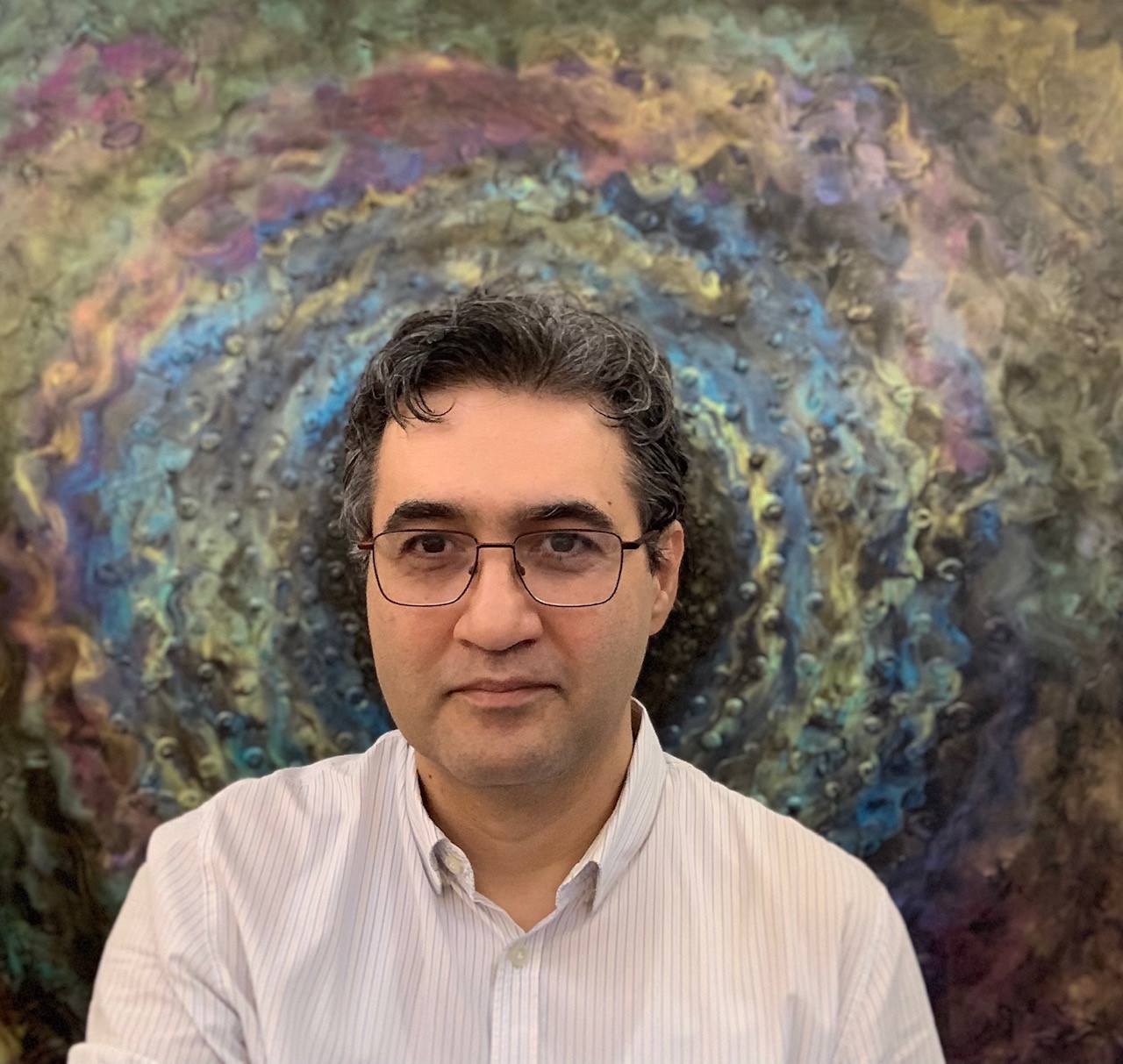
Neda, the girl who died so the world knew

Three years ago, on 20 June 2009, Neda, the Iranian girl, bled to death on the streets of Tehran, shot by an Iranian pro-government militiaman during the protests to the fraudulent presidential elections.

She was one of hundreds of people who were slain by the Iranian brutal government, just because she aspired for change. Right before she died, her gaze was captured on a cameraphone, circulated the web, and caught the attention of millions around the world and became the most watched death in the history.

In the days after she died, the international media went hysterical about this tragedy. Presidents and Prime Ministers condemned it, the Iranian people called for justice, the Iranian government denied it. But her death had moved millions. The world now knew. They knew that in the mysterious land of Iran, there also lives a generation who is so much like their peers around the world, a generation who wants to find joy in life, wants to have a voice, and is ready to give up everything in the quest for freedom.

However, three years have passed now. The green movement has been suppressed violently, hundreds of people are in prison, hundreds in anonymous graves, and those who have a grave are under constant surveillance lest people pay homage to them.

Three years have passed and the world has moved on. Their only concern about Iran is for the nuclear ambitions, for which no evidence exists. In the meantime, those who shouted for freedom have fallen into despair, feeling that the world has forgotten them. In the meantime, the world no longer remembers Neda, the girl who stared into the camera seconds before she died, saying ‘look at me, don’t forget that they killed me, because I wanted to have a voice.’

The media has moved on, they no longer care about the most watched death in the world, it’s the time of Euro games, and then Olympics.

And the brutal Iranian regime looks back at all the crimes and injustice it committed in the last three years, and realised that no one really cares anymore. The fundamental regime smiles and says, ‘I did the right thing to kill all those who protested. I’ll do the same next time. After all, everyone would forget the bloodshed before the next Olympic games


Care about human rights more than you care about Iran’s nuclear ambitions

I was recently in Sweden for the launch of my memoir, The Gaze of the Gazelle, called 47 Sekunder: En berättelse om Irans förlorade generation in Swedish. There, among the warm hospitality of the Swedish publisher and the encouraging and welcoming approach of the Swedish media, I was asked the same two questions over and over again: What do you think about the Iranian nuclear programme, and, what the world can do to help Iranians?

I did give them my answer then, and since I have come back from Sweden, the second question haunts me. I cannot talk on behalf of all the Iranians [isn’t that what dictators usually do?] I can only talk for myself, but as an Iranian, one of the millions who poured into streets in June 2009 to call for change, one of those who likes to believe that we had something to do with the start of the Arab spring, a part of the generation that lost its youth and joy, but kept nourishing its dreams, growing up under a totalitarian regime, spending its best years in the Iran-Iraq war, but surviving to tell the story.

The world is seriously concerns about the alleged Nuclear ambitions of Iran, but has stopped caring about the human rights situation: Today, hundreds of Iranian writers, activists, reporters, bloggers and other prisoners of conscience are rotting the Iranian prisons; women and minority rights have never been undermined as much as today, fear has overwhelmed the society, all the attempts to express the widespread dissent among the Iranians have been brutally suppressed by the totalitarian regime, another generation is being burnt.

And all the world cares about is the nuclear ambitions of Iran, of which no hard evidence is available. For this, the nation, the very people who stood up against the abuse in Iran in 2009, are being punished by embargoes against the Iranian oil and banks, which is destroying the Iranian economical infrastructure, taking away the livelihood of people, and putting families under strict pressure. On the other hand, they have to face constant threats against their security, and deal winner constant fear that Israel or the NATO could invade Iran any day.

What hope have they got to cling on to? They are being punished by everyone: their basic rights are being abused by the Iranian regime, their livelihood is being compromised by the international sanctions, and their safety and security is being threatened by the international community. The world is not listening to their pain, and their own government is  punishing them for expressing it.

If the world does not care about their livelihood, their freedom, and their safety, the Iranians will stop caring about the international security. These are dangerous and uncharted waters. The question lurking in our minds is: What will happen if tomorrow the Islamic Republic of Iran announces that they have voluntarily stopped their uranium enrichment, and the observers are welcome to visit any facility they wish in Iran? The Islamic Republic becomes friend to the West again, the world won’t need to worry about the nuclear threat anymore, and would turn to their own issues. But what will happen to the prisoners of conscience on the death row? What will come out of the porters who are rotting in prisons and the persecuted families? What about those bloods that were she’d in a cry for freedom and democracy?That’s not going to be a concern for the old anymore, would it?

Focus on the human rights abuse in Iran and other countries. The Iranian regime should be held accountable for its crimes against its own people. Could you ever trust a regime that opens fire on its own people?

Probably it’s time for the UN to assume a new role. It’s not the nuclear ambitions of a country that can threaten international security, it’s the human rights abuse in any given country that undermines international peace.

Arash Hejazi

17 February… I was born, Giuordano Bruno was burnt alive, and there are still people dying for their dreams

It was my birthday yesterday. 17 February was the day that Giurdano Bruno was burnt alive, Newsweek was published for the first time, and Sadeq Hedayat, the great Iranian author was born. I did want to become an author and publisher, following Hedayat and Newsweek; but I never dreamt that I would be following Bruno’s path one day. Now I am being virtually burnt alive for speaking up the truth, just like Bruno. I witnessed a crime and spoke up about it, and for that I was persecuted. Now, it has been three years since I last celebrated my birthday in my homeland, among my family and friends. It’s been three years since I last saw the vast desert and the ever-shining sun of my country, or spoke my mother language without feeling that I am speaking to myself.

But this is not important. Truth shall set us free. The thing that has been preoccupying me since yesterday, is the world we live in and the country we love so much, but does not love us back.

The Iran I miss so much does not exist anymore, it probably never did. It was an idea… not a reality. In the country I loved and never existed, the rulers wouldn’t open fire on their own people, people wouldn’t be tortured and killed for their ideas or words, the leaders did not aspire to become a militiary power at the expense of the freedom of their people, and children were happy, the youth looked forward to the future, the mature people looked at their young ones and smiled, and the old ones looked back and were happy that the world they were leaving was a world better than the world they were born into.

In the Iran that exists, just when I turn 41, there is a brave doctor in Iran’s notorious Evin prison who has been on hunger strike for 40 days and might die any day, and no one is doing anything to save him. There is a journalist who is being deprived of medical care and tied to his bed to die because of his heart condition. There is a web developer waiting in the death row to be hanged any day now, and no one is doing anything to stop the hangman from taking an innocent life. It’s a country where people are starving, because of the ambitions of the rulers. No one dares speak, no one dares try, no one dares live.

And then I look at the ‘world’ I am living in… no one is doing anything to stop the bloodshed. Children in Syria are being murdered, and the world is looking, shaking its head in sorrow, but not doing anything.

And then, I, the advocator of peace and non-violent resistance, think on my birthday, that what the world can do? Does raising war against a regime save innocent blood or shed even more blood? And if war is not the solution what is? What can we do to save Dr Mehdi Khazali from dying in the prison? What can we do to bring Neda’s murdurers to justice? What can we do to stop the bloodshed in Syria? What can we do to stop children dying in Somalia?

I don’t know. All I can do is to raise awareness, and to do what I can as an individual: Speak the truth even if it means death for myself, do not turn my face away from the atrocities in the world pretending that they are not happening, and dedicating part of my income to save a few starving or ill children.

How do we deal with Evil? How do we face a regime, armed to the teeth, rich from oil money, that follows no moral values and respects no international convention? A regime that has not the least respect for human life, for happiness, and for prosperity? How long can we remain silent? I hear from some people here that they have their own problems, there is a recession they are struggling with, and they have to think about the inflation. Why should they care or do anything about another nation’s problems? Why should they spend money to support someone else’s cause when their rulers don’t?

To me, an innocent life is more valuable than all the organizations and regimes and economies and governments in the world. The Security Council is worth nothing if it can not ensure the security of a single innocent person who dies in a prison, by a bullet, are from starving. There is enough food in the world to feed all the children starving and dying. There is enough room in the world for every one to have their say and fulfil their dreams.

Our lives as individuals are worth nothing if there is an innocent life being taken somewhere in the world, and we don’t care, and we turn our faces not to see, and we change our TV channels not to know. Think about it. When was it the last time you did something to save someone’s life? I’m not calling to arms, but when was the last time you wrote a single word on your facebook wall, trying to save an innocent life? If you don’t care, and if you care but don’t do anything about it, your life is a waste.

And on my birthday yesterday, I felt that my life has not been a waste. I cared, and I did something about it. And I have to not let myself fall into the mundane ordeals of everyday life and forget. Forget that there is world out there where innocent people are dying, and I am not doing anything about it…

Arash

Dr Shaheed, what you have presented is just the tip of the iceberg: An open letter to Dr Ahmed Shaheed, Special Rapporteur on the situation of human rights in the Islamic Republic of Iran

[Read the text in Persian Here]

Dear Dr Ahmed Shaheed,
Special Rapporteur on the situation of human rights in the Islamic Republic of Iran,

I am Arash Hejazi, an Iranian physician, writer, publisher and journalist, and the Doctor who tried to save the young girl shot to death by the Iranian Basij or the pro-government militia, orchestrated by the Revolutiosnary Guards of the Islamic Republic of Iran. I then spoke up about the circumstances of hear death to the international media and for that I have lost my publishing house in Iran, I have been prosecuted and persecuted, and I have had to go on exile, leaving my family and my life behind.

I read your Special Report with interest, and while I appreciate your efforts on producing an accurate image on the dyre situation of human rights in Iran, I would like to bring to your attention that what you have presented in your report, is just the tip of an immense iceberg of years of undermining human and basic rights of the citizens of Iran.

You didn’t mention,

  • The brutal crackdown of the Iranian pro-government militia, the police, and the Revolutionary Guards on the peaceful rallys of millions of people who were simply asking for the recount of the ballots of the presidential elections in June 2009;
  • The brutal murder of hundreds of unarmed civilans on the days that followed the elections. One of them which was documented, was the murder of Neda Agha-Soltan by a member of the Basij. Mothers of those murdered have tried so hard to get their voices heard, and even they have been persecuted and beaten by the Basij;
  • That the judiciary system of Iran has done absolutely nothing to bring the murderers of these innocent people to justice. Instead, it has done everything in its power to intimidate and threaten withnesses of these crimes;
  • The torturing and murder of several protesters after being arrested by the police. Even the government of Iran has admited the murder of three detainees under torture;
  • Hundreds of students that have been banned from continuing their studies, simply because the have been part of the Green Movement.
  • The legistlation of capital punishment for bloggers;
  • The fact that a muslim cleric, called Kazemeini Brujerdi has been imprisoned and tortured for years now, simply because he expressed his opinion that religion should be separated from the State;
  • The widespread and illegal censorsip on books and other media. I have explained the situation in my article ‘Censorship in Iran’;
  • The execution of prisoners of consciouns in Iran;
  • Mistreating political prisoners leading to unexplained deaths;
  • Undermining the rights of the minority groups in Iran, such as the Kurdish people;
  • Undermining the rights of the workers and their unions;
  • Undermining the children rights;
  • Undermining the rights of the guilds and trade unions;
  • Persecution and prosecution of the human rights activists.

Dear Dr Shaheed, this is a unique oportunity that destiny has placed on your path to make a difference. It might not be repeated. For the sake of hundreds of thousands of lives that have been destroyed in Iran in the past 30 years, I beseach you to do whatever in your power to reflect the truth, the whole truth, and nothing by the truth.

Kind regards,

Arash Hejazi

O World! Enough hesitation! It’s time to act

[I first published this post in 30 December 2009, but unfortunately, nearly two years later, the world is just starting to realise the real danger of the regime occupying the maginificent land of Iran. I decided to publish it again without changing a word.]

[Read the text in Persian Here]

[Read the text in French Here]

Hundreds of newspapers have been shut down in Iran; international reporters have been banned; hundreds of Iranian journalists are in prison; internet has almost been shut down; the sophisticated filtering system has blocked the contact of the Iranian people with the world; the police is massacring people in the streets in broad daylight and then blames the violence on the people themselves; the government is giving out lies after lies; all the minority ethnic and religious groups are suffering from the official oppression; prisoners have been tortured, raped, murdered; the Basij militia shoots unarmed civilians in the streets; students have been expelled from the universities because of protesting against tyranny…

While you, people of the world, are celebrating the New Year by embracing your loved ones with joy, while you dance to the Christmas tunes, the young people in Iran are dancing to the macabre music of the bullets and embrace batons and teargas. While you are hugging each other and wishing a happy new year, mothers in Iran are forbidden to shed tears for their children who were brutally murdered by the police trucks running them over. The people of Iran are alone, they are broken, they are tired, but determined to go on.

Do you think this has nothing to do with you? Do you think that you only need to worry about your domestic affairs? Do you think that saying a few words of condemnation will redeem you from your global responsibility towards human rights? Is this the global citizenship you preach?

This is the most dangerous State in the world. Hesitate in acting and you will see how this government, rooted in lies, will destroy your own children. What do you expect? Do you think that a totalitarian regime that does not show mercy to its own children will have pity on your people? Do you think that this beast will stay calm and watch you? Wrong! Hesitate and see.

The people of Iran have spoken with their torn throat and through the last sparkle of life in Neda’s eyes; they have written their vows with their own blood on the pavements in the streets: They want to be global citizens, they resent terrorism, tyranny, lies, wars, nuclear weapons… and they have died the most brutal deaths for speaking out. Why are you watching silently? Do you think you are safe? Do you think that this cancer will be contained inside the borders or Iran? Do you think that the rotten claw of this grim reaper will not reach you? Wrong. Hesitate and see.

It is time to act. There are people drowning in Iran. Do not believe the lies of the Iranian government. This government that denies all these brutalities is the same that denies the Holocaust, that claims that there are no homosexuals in Iran, that Neda Agha Soltan was killed by CIA, MI6 and BBC, and there is freedom of press in Iran.

How to act? We do not want any violence. This government is falling. Just do not support the government. Do not recognise the current government of Iran. Do not negotiate with them – How can any negotiation with someone who tells nothing but lies and is willing to break any promise, be fruitful? Do not be deceived by their lies. Expel the Iranian ambassadors and diplomats. You will lose nothing and will gain everything by supporting the future of Iran. Hesitate, and you will be run over by the evil machines of this rotten government. Hesitate, and you will be weeping over the graves of your own children.

It is time to act. Hesitate, and when you regret your hesitation, it will be too late.

Arash Hejazi, 30 December 2009

Washington Post’s analysis on Iran is ignorant and Naive: There is more depth to what the Iranian people are doing

An article published in Washington Post on June 16 2011, called ‘In Iran, ‘couch rebels’ prefer Facebook’, claims — based on its interview with three or four Iranians, whose identity (except for Abbas Abdi) is not known — that the Iranian people have given up on their protests that started in 2009, because they prefer ‘playing Internet games such as FarmVille, peeking at remarkably candid photographs posted online by friends and confining their political debates to social media sites such as Facebook, where dissent has proved less risky’.

To someone who knows about the undercurrents of the Iranian society, this simple explanation shows how ignorant the Western media, and probably politicians, are in interpreting what’s really going on in the Middle East and the socio-politico-cultural differences in each country. I have seen more that one ‘political’ analysis or opinion pieces in the media that try in vain to compare the successful rebels or ‘revolutions’ in Egypt and Tunisia to Iran and Syria and Libya, while these comparisons cannot be more relevant than comparing the 1917 Revolution of Russia to the Independence wars of America.

First of all, what happened in Egypt and in Tunisia, could not be categorised as ‘revolution’, as what really happened was a successful process of removing a dictator from power, started by an uprising of the people, and then supported by the West. Had not the US forced Mubarak to leave his seat, it would be a much longer process for people to succeed on their own. The root of Mubarak’s power was the enormous support he received from the US. When the US stopped supporting him, it was just a matter of time when the army removed him from power and took full control over the country. Syria and Libya, on the other hand, received no support from the US and the source of their powers were either Oil, or their complex geopolitical arrangements in the region. This is why, after months of rebellion, uprising and civil wars, we can see no progress towards the fall of the dictators in these two countries, despite all the bloodshed and the courageous stand of the people. A real revolution is identified by a fundamental change in power and organizational structures that takes place in a relatively short period of time. It includes complete change from one constitution to another, or modification of an existing constitution, according to Aristotle. We still haven’t seen a change in constitution in Tunisia and in Egypt, only the removal of one person from power.

Iran is not comparable to any of these countries. For one thing, the system ruling in Iran is not a dictatorship (although it is turning into one); it’s a totalitarian regime ruling in Iran, a system, not a single person. I keep being asked by the journalists that the Iranian people can release a sigh of relief once Ahmadinejad finishes his term as the president in 2013. What they don’t know is that Ahmadinejad holds no real power. No single person does. In the Soviet Union it didn’t really matter if Stalin died. The system was designed in a way to be sustainable for the foreseeable future, and was presumably invincible. The presumption was not far from truth. Only someone from within that system could introduce change, a mission that Gorbachev took on. The people could not defeat the system. For the very same reason, in 2009, the Iranians decided that among the approved candidates for Presidency, Mir-Hussein Mousavi was the only person who had the strength, determination tools for introducing this gradual change into the regime. People united behind him for this very reason, despite their varied ideas about the future regime of Iran.

The people of Iran had already experienced the consequences of a full blown revolution. They have witnessed two successful revolutions: The Constitutional Revolution at 1907, and the Islamic Revolution at 1979. Both resulted in fundamental structural and organisational change as well as transition to new constitutions. However, the new regimes that replaced the previous regimes proved a ‘revolution’ to be a poor resolution for the abolishing tyranny. The 1907 revolution resulted in the reign of terror started by a dictator, Reza Shah (who came to power aided by the British), who abolished the new-born democracy in Iran for nearly 70 years. The 1979 revolution resulted in the establishment of the Islamic Republic of Iran, one of the cruelest and most suppressive totalitarian regimes the world has ever seen.

When the people of Iran who had united under the Green Movement to reclaim their votes were brutally suppressed and the international community did nothing concrete to support them, they realised that their hopes for gradual change had come to nought. Now they were facing another dilemma, if there were no hopes for the gradual opening within the context of the Islamic Republic, how could this system be replaced with a liberal-democratic regime in the most peaceful way?

Revolution wasn’t the answer, as it would incur unspeakable bloodshed: The regime has all the military power, the wealth, the bargaining tools with the world, and all the media outlets. On the other side, the only tool that the people have in their hands, peaceful demonstrations and civil disobedience, have proven to be ineffective in the short-term against an armed-to-the-teeth regime that follows no ethical or moral values and considers any disobedience and dissent as treason, punishable by death on the spot, torture, long-term imprisonment, and execution without fair trials. The international community hasn’t been supportive either. All the sanctions imposed on Iran has been fruitless in stopping Iran from pursuing its nuclear ambitions, and still, the Iranian oil is too precious to the western world to be sanctioned. The oil provides the regime with almost all of the budget it needs to suppress its own people and to sponsor terror around the world.

A few weeks ago, a prisoner attending her father’s funeral was beaten to death in front of peoples’ eyes; a week later, a political prisoner on hunger strike in protest to the crime, was beaten to death inside the prison. Right now, there are 12 Iranian political prisoners on hunger strike. The government of Iran is ready to go the full distance, as it feels that there are no consequences for what they do: ‘Let these 12 prisoners die too, who really cares in the world, or if they do care, what can they really do? They still want our oil, and as long as they do, they will work with us, no matter what.’

On the other hand, Ahmadinejad, once the favourite of Ayatollah Khamenei, the Supreme Leader of Iran, has now apparently fallen out of favour, after disobeying a few direct orders from the Leader. The Supreme Leader cannot even tolerate the empowerment of his own puppet president and let him run the country. The Parliament is now closing down on Ahmadinejad, and the direction of the events implies a rapid transition from a totalitarian regime to a dictatorship: Ayatollah Khamenei wants to hold all the power, something unprecedented in the past 32 years, when the power was balanced between a few who would do anything to support the regime despite their variety of opinion.

This is why the Iranian people have now decided to slow the movement down, and take it to a deeper layer. The social media are still their only way of communication, where you can see real polyphony among Iranians. The people in Egypt wanted Mubarak to go and were united under this single slogan. The people of Iran want a democratic, liberal, and economically dynamic society, and before fighting to achieve it, they are debating it, so when the right time comes, they all understand democracy and freedom in its truest sense. This reflects the maturity of a nation who does not act on impulses, but on intellect; a nation who is closely observing the events, and preparing itself. Let’s hope that everything will work out fine for the Egyptians and Tunisians, but when change comes to Iran, it will be real and intrinsic change, not a short-term facelift.

The Iranian Police Killed the Daughter of an Iranian Dissident at Her Father’s Funeral

Iranian activist dies in scuffle at her father’s funeral

Haleh Sahabi, daughter of veteran dissident Ezatollah Sahabi, reportedly clashed with security forces

guardian.co.uk, Wednesday 1 June 2011 11.18 BST

The daughter of a prominent veteran Iranian dissident has died after reportedly scuffling with security forces at his funeral.

she was holding a picture of her father to her chest and fell when security forces tried to take it from her.

Haleh Sahabi, 54, also an opposition activist and women’s rights campaigner, had been allowed out of prison to attend the funeral of her father, Ezatollah Sahabi, on Wednesday. She fell to the ground in the scuffle and died of a cardiac arrest, according to the opposition website Kaleme.

The semi-official Fars news agency confirmed Sahabi’s death but denied there had been a clash with police and accused the opposition movement of seeking to politicise the incident.

“Fars reporters present at the funeral service said there was no clash between the mourners and security forces,” it said.

Alireza Janeh, head of security matters at the Tehran governor’s office, said there were no clashes and that Sahabi had died of heart problems exacerbated by stress and hot weather at his funeral.

Sahabi’s death is likely to anger women’s rights campaigners and supporters of Iran‘s opposition movement, whose massive street protests after the re-election of President Mahmoud Ahmadinejad in 2009 were crushed by the government and whose leaders have been put under house arrest.

Sahabi was arrested during the post-election crackdown and was given a two-year jail sentence.

“Security forces tried to interfere in the carrying of the body, she objected and security forces confronted her and other people present,” Kaleme said, adding that Sahabi was pushed to the ground. Another opposition site, Sahamnews, said security forces punched her in the stomach.

Kaleme said she was holding a picture of her father to her chest and fell when security forces tried to take it from her. “She fell and did not get up,” it said.

Read More

Chief of the ‘Moral Security’ Police in Tehran: Not observing the Islamic cover for women, using satellite dishes and dog-walking are infringing the civil rights!

Aftabnews.ir 09/05/2011
َ

The highlights of General Roozbahani’s interview with Aftabnews on Monday 09 May:

– The police will enter the war with West’s cultural invasion and moral corruption with all its might.

– We will strictly prohibit dog-walking after the legistlation is passed through the parliament. Dogs creat insecurity for the citizens and sometimes they bark!

– Not observing the Islamic Hijab (cover) is against the civil rights.

– The usage of satellite dishes has created problems for the country and is against the civil rights.

More than 150 Iranian prisoners killed or injured during clash with the Guards

Human Rights Activists News Agency (HRNA), 16/03/2011
According HRNA, 150 inmates of the Ghezel-Hessar Prison near in Karaj, Iran, have been killed or injured by the security guards last night, after protesting to the imminent execution of 10 prisoners. According to reports, the prisoners shouted: ‘Stop Executions!’ and they broke down the gates to the wards. At 9pm last night, the security forces attacked the wards which resulted in bloodshed.

The reports claim that live bullets were used to control the prisoners which led to 80-150 casualties.

All the communication between the prisoners and outside has been cut off.

Iran, Tunisia, Egypt… What’s next? Time up for dictators?

In the last three years, from 2009 to 2011, several uprisings against dictatorships around the world have happened [namely: Iran, Tunisia, Egypt, Jordan, Yemen, Niger, Thailand and Sudan] with different outcomes. But this does not change the fact that it seems that the people living under dictatorship and totalitarian regimes are fed up.  While some of these oppressive governments have been supported by the Western countries, these changes show that apparently there is no room for dictators in the new century. The course of history is determining a new direction for countries suppressed fiercely in the past century. We have to wait and see if the people will be successful in establishing new democracies, or if the Western countries will take these changes seriously or still ignore them and try to continue working with and supporting the dictators.

In all these countries, the ruler controls all the media outlets, there is no freedom of speech, elections are controlled by the same people who are eventually elected, and any kind of opposition is suppressed. How else, the people can show their contempt for the rulers and their desire for freedom and democracy? Their only way is to protest in the streets, which is usually brutally suppressed by the rulers and the free countries just frown upon the brutality. What is going to happen to these people? Who is going to support them? How are they supposed to achieve their freedom, when even by sacrificing their lives, nothing changes?

Iran

In June 2009, after the widespread fraud in Iran’s presidential election during which the incumbent president, Mahmoud Ahmadinejad, was re-selected (not elected) as the president of Iran, large street protests started and lasted for several months. He claimed that he had received 63% of the votes, whereas the people believed that his main rival, Mir Hussein Mousavi was actually the person who had received 63% of the votes.

Iran has been ruled by the totalitarian Islamic regime since 1979. At the beginning of the protests, people only wanted the ballots to be recounted, as almost all were sure that their votes had been rigged. The regime ignored all the complaints from the competing presidential candidates and on June 19, the Supreme Leader publicly announce that those who continue the protests, would be responsible for the consequences, which turned out to be murder, torture, rape and imprisonment. The protests continued, during which, hundreds were shot by the plainclothes police and militia, several were ran over by the police cars, and tens died afterward from the injuries caused by the anti-riot police and the Basij’s batons. More than four thousand dissidents and protesters were arrested, tens of which died in detention centres under torture, and there were documented reports of prisoners being raped during interrogations. The government started blaming all the turmoil on the West and Israel, and did not acknowledge the fact that by their latest activities, they had turned the demand for recounting the votes into a widespread hatred towards the whole regime. Now people were not looking for their votes anymore and were targeting the Supreme Leader, as the unifying symbol of the regime. The Islamic Republic did not back off. They crushed the protests with all their might and ignored all the pledges from various international bodies for observing human rights.

Tunisia

Zine El Abidine Ben Ali became the President of Tunisia on 7 November, 1987, and was in power for 23 years, until 2011. In October 2009, the latest presidential elections in Tunisia were held and a Human Rights Watch report called it “an atmosphere of repression”. Ben Ali faced three candidates, two of whom said they actually supported the incumbent. No independent observer was allowed to monitor the vote, and Ben Ali won a landslide victory, with 89.62%. His opponent, Mohamed Bouchiha, received 5.01%. The candidate who was most critical of the regime, Ahmed Ibrahim, of the Ettajdid party, received only 1.57% after a campaign in which he was not allowed to put posters up or hold any kind of meeting.

In January 2011, though, the people’s protests showed that Ben Ali did not enjoy the support of nearly 90% of the voters. The demonstrations and riots were reported to have started over unemployment, food inflation, corruption, freedom of speech and poor living conditions. The protests led to the ousting of Ben Ali, who stepped down from the presidency and fled Tunisia on 14 January 2011 after 23 years in power.

Egypt

Following the assassination of President Sadat in 1981, Hosni Mubarak became the President of the Arabic Republic of Egypt, and the Chairman of the National Democratic Party (NDP). He has now been in power for 29 consecutive years.Mubarak has been re-elected by majority votes in a referendum for successive terms on four occasions: in 1987, 1993, 1999. No one could run against the President due to a restriction in the Egyptian constitution in which the People’s Assembly played the main role in electing the President of the Republic. After increased domestic and international pressure for democratic reform in Egypt, in 2005 the constitution was amended and it allowed multi-candidate presidential elections.  Previously, Mubarak secured his position by having himself nominated by parliament, then confirmed without opposition in a referendum. However, in the September 2005 elections, the electoral institutions, and security apparatus remain under the control of the President. The official state media, including the three government newspapers and state television also express views identical to the official line taken by Mubarak. On 28 July 2005, Mubarak announced his candidacy, as he had been widely expected to do. The election which was scheduled for 7 September 2005 involved mass rigging activities, according to civil organizations that observed the elections. Reports have shown that Mubarak’s party used government vehicles to take public employees to vote for him. Votes were bought for Mubarak in poor suburbs and rural areas. It was also reported that thousands of illegal votes were allowed for Mubarak from citizens who were not registered to vote. On 8 September 2005, Dr. Ayman Nour, a dissident and candidate for the Al-Ghad party – Tomorrow party, contested the election results, and demanded a repeat of the election. In a move widely seen as political persecution, Nour was convicted of forgery and sentenced to five years at hard labor on 24 December 2005.

Then, shortly after the uprising in Tunisia, the street protests started in Egypt. Thousands of people poured into streets, demanding Mubarak to abandon his position as the president. As there protests are still ongoing, we will have to wait and see the outcome. But whatever the outcome, this does not change the fact that Mubarak is not as popular as he believed.

Yemen

Ali Abdullah Saleh became the first elected President in reunified Yemen in 1999 (though he had been President of unified Yemen since 1990 and President of North Yemen since 1978). He was re-elected to office in September 2006. Saleh’s victory was marked by an election that was accompanied by violence, violations of press freedoms and allegations of fraud.

In the past few days, after the Tunisia incidents, thousands of students and opposition activists demonstrated at Sana’a University, calling, very directly, for President Ali Abdullah Salih to go, alluding to events in Tunisia.

Jordan

Jordan’s most executive power is the King. The King traditionally has held substantial power, and although the parliament can control his decisions, but it has rarely happened. The Hashemite dynasty has ruled over Transjordan and Jordan for 90 years.

King Abdullah II, witnessed the uprising of his people in January 2011. Bread and freedom” was one of the slogans, along with calls for the government to resign. Complaining about the king is still taboo in Jordan, so the protests focused on his ministers, even though it is the king who actually pulls the strings.

Kyrgyzstan

President Kurmanbek Saliyevich Bakiyev came to power in 2005, as the acting President after the downfall of President Akayev. Despite initial hopes, Bakiyev’s term in office was marred by the murder of several prominent politicians, prison riots, economic ills and battles for control of lucrative businesses. In 2006, Bakiyev faced a political crisis as thousands of people participated in a series of protests in Bishkek. He was accused of not following through with his promises to limit presidential power, give more authority to parliament and the prime minister, and eradicate corruption and crime.

Finally, in April 2010,  after bloody riots in the capital overturned the government, Bakiyev reportedly fled to the southern city of Osh.

Niger

President Mamadou Tandja held the power in Nigeria since 1990.  Following a constitutional crisis in 2009, which was caused by Tandja’s efforts to remain in office beyond the originally scheduled end of his term, he was ousted by the military in a coup d’etat in February 2010.

Thailand
The country is a kingdom, a constitutional monarchy with King Bhumibol Adulyadej, the ninth king of the House of Chakri, who has reigned since 1946, making him the world’s longest-serving current head of state and the longest-reigning monarch in Thai history.[7] The king is officially titled Head of State, the Head of the Armed Forces, an Upholder of the Buddhist religion, and the Defender of all Faiths.
As of April 2010, a set of new violent protests by the Red Shirt opposition movement, possibly backed financially by fugitive former Prime Minister Thaksin Shinawatra, have resulted in 87 deaths (mostly civilian and some military) and 1,378 injured.

Sudan

The Darfur Conflict is an ongoing civil war centered on the Darfur region of Sudan. It began in February 2003 when the Sudan Liberation Movement/Army and Justice and Equality Movement (JEM) groups in Darfur took up arms, accusing the Sudanese government of oppressing or committing genocide against non-arab Sudanese in favor of Sudanese Arabs. One side of the conflict is composed mainly of the official Sudanese military and police, and the Janjaweed, a Sudanese militia group recruited mostly from the Arab Abbala tribes of the northern Rizeigat region in Sudan; these tribes are mainly camel-herding nomads. The other combatants are made up of rebel groups, notably the SLM/A and the JEM, recruited primarily from the non-Arab Muslim Fur, Zaghawa, and Masalit ethnic groups. Although the Sudanese government publicly denies that it supports the Janjaweed, it has been providing financial assistance and weapons to the militia and has been organizing joint attacks targeting civilians.

Under international pressure, a referendum took place in Southern Sudan from 9 January to 15 January 2011, on whether the region should remain a part of Sudan or become independent. The referendum was one of the consequences of the 2005 Naivasha Agreement between the Khartoum central government and the Sudan People’s Liberation Army/Movement (SPLA/M).

As of 23 January 2011, preliminary results indicated a landslide of 98.8% voting in favor of independence.

O World! Enough hesitation! It’s time to act

[Read the text in Persian Here]

[Read the text in French Here]

Hundreds of newspapers have been shut down in Iran; international reporters have been banned; hundreds of Iranian journalists are in prison; internet has almost been shut down; the sophisticated filtering system has blocked the contact of the Iranian people with the world; the police is massacring people in the streets in broad daylight and then blames the violence on the people themselves; the government is giving out lies after lies; all the minority ethnic and religious groups are suffering from the official oppression; prisoners have been tortured, raped, murdered; the Basij militia shoots unarmed civilians in the streets; students have been expelled from the universities because of protesting against tyranny…

While you, people of the world, are celebrating the New Year by embracing your loved ones with joy, while you dance to the Christmas tunes, the young people in Iran are dancing to the macabre music of the bullets and embrace batons and teargas. While you are hugging each other and wishing a happy new year, mothers in Iran are forbidden to shed tears for their children who were brutally murdered by the police trucks running them over. The people of Iran are alone, they are broken, they are tired, but determined to go on.

Do you think this has nothing to do with you? Do you think that you only need to worry about your domestic affairs? Do you think that saying a few words of condemnation will redeem you from your global responsibility towards human rights? Is this the global citizenship you preach?

This is the most dangerous State in the world. Hesitate in acting and you will see how this government, rooted in lies, will destroy your own children. What do you expect? Do you think that a totalitarian regime that does not show mercy to its own children will have pity on your people? Do you think that this beast will stay calm and watch you? Wrong! Hesitate and see.

The people of Iran have spoken with their torn throat and through the last sparkle of life in Neda’s eyes; they have written their vows with their own blood on the pavements in the streets: They want to be global citizens, they resent terrorism, tyranny, lies, wars, nuclear weapons… and they have died the most brutal deaths for speaking out. Why are you watching silently? Do you think you are safe? Do you think that this cancer will be contained inside the borders or Iran? Do you think that the rotten claw of this grim reaper will not reach you? Wrong. Hesitate and see.

It is time to act. There are people drowning in Iran. Do not believe the lies of the Iranian government. This government that denies all these brutalities is the same that denies the Holocaust, that claims that there are no homosexuals in Iran, that Neda Agha Soltan was killed by CIA, MI6 and BBC, and there is freedom of press in Iran.

How to act? We do not want any violence. This government is falling. Just do not support the government. Do not recognise the current government of Iran. Do not negotiate with them – How can any negotiation with someone who tells nothing but lies and is willing to break any promise, be fruitful? Do not be deceived by their lies. Expel the Iranian ambassadors and diplomats. You will lose nothing and will gain everything by supporting the future of Iran. Hesitate, and you will be run over by the evil machines of this rotten government. Hesitate, and you will be weeping over the graves of your own children.

It is time to act. Hesitate, and when you regret your hesitation, it will be too late.

Arash Hejazi, 30 December 2009

The open letter of Neda to President Obama

The letter bellow was posted on my facebook discussion page yesterday by the ID Mehdi Amin, which I’m sure is an alias. The letter is based on my open letter to President Obama; but this time it’s not me who is addressing the President; it’s Neda Agha Soltan. It was a really moving letter and therefore I have posted here (courtesy of Mehdi Amin), so that perhaps President Obama reads it:

Dear Mr. President Obama,
My name is Neda Agha Soltan. I was killed by a Basiji in a street of Tehran while watching a post-election protest. Perhaps you remember me. Millions of people watched me die in less than 40 seconds. Perhaps you remember my open eyes when I took my last breath. But I will live for ever in the memory of freedom loving people of the world. I have become the guardian angle of my sisters and brothers who are fighting for a free Iran; I have become their voice and that is why I am writing to you.
Just imagine one of your daughters dying in the same way as I did! How would you feel if not only the killer went unpunished, but got rewarded for what they did? What would you tell millions of Iranian young people who are feeling that the beacon of freedom has betrayed them by shaking hands with the killers of their sisters and brothers? What would you tell your daughters if they asked why you are rewarding the killers of Neda?
I am the voice of the people of Iran . I am calling upon you to support the democratic movement of people in Iran . I am not asking you to make war. I am not even asking you to help our struggle for freedom. I am just asking you not to support the government that has terrorized its own nation for 30 years. I am just asking you to stand on the side of humanity instead of oppression, torture, rape, and killing.
With regards
Neda Agha-Soltan

Arash Hejazi’s Interview with The Times / November 13, 2009

Iranian doctor Arash Hejazi who tried to rescue Neda Soltan tells of wounds that never heal

As Arash Hejazi sat in an Oxford coffee bar, members of Iran’s Basij militia in Tehran were demanding his extradition outside the British Embassy.

The previous day the Iranian regime had sent an Oxford college a letter of protest over a scholarship given to honour Neda Soltan, the student killed during a huge demonstration against electoral fraud in Tehran in June. The letter also suggested that Dr Hejazi was responsible for her murder.

Read more

Mr. Ahmadinejad, it’s enough. Shame on you! Open your eyes!

In the past three months, millions of the Iranians declared that they don’t want you; in different tones, in the campaigns before the elections, on the day of the election and during the protests after the election; despite and your ruthless and cruel oppression. Have you asked yourself even once that why these people don’t like you and why they show you their dislike, even for the price of their securities and lives?

In between the justifications that even you don’t believe in them, in between your meetings with your companions when you blame everybody, from the east to the western ends of the world, for inciting the Iranian people to uprising in objection to your policies, have you ever asked yourself why these people do not give up?

Mr. Ahmadinejad,

How many times have you claimed the death of Neda is ‘suspicious’? Have you ever asked yourself what had she done to deserve such a fate? Despite all the undeniable evidences and proofs published about Neda’s death, what evidence have you published to show that you are telling the truth? In the election debates you said that liars are cowards. But you lied even then. Liars are shameless, they don’t have a conscience. The liars shoot a young and innocent girl in the chest in the broad daylight and then blame fantastic conditions for her death.

Mr. Ahmadinejad,

Since you have become the president, we have rarely heard a truth coming out of your mouth. The lust for power has burned your soul and conscience. Superstitions and populism have corrupted your ability to distinguish good from evil and its outcome for our people has been nothing but decay, destruction of the industries, ruining of our agriculture, demolition of our culture, devastation of our press and publishing industry, obliteration of sports, thousands of people becoming refugees, obliteration of the hopes of a three thousand years old nation and leaving a graveyard full of the graves our of innocent youth behind.

Have you asked yourself what do these people want?

Have you considered giving them what they want?

I will tell you what they want. Although I know you already know, and I know that you cannot grant their wishes, because if you put aside the mask of the tyrant you have chosen, there will be nothing left of you but a helpless man, even though being helpless is much better than being a tyrant.

  1. People want to be free to choose their leaders. They want to choose anyone they want, regardless of gender, religion or race. Do people have this right in Iran?
  2. People want the rule of the majority while respecting the rights of the minority. Have these rights been respected? Haven’t you levelled the gathering hall of the Dervishes who were even Shiite Muslims? Do the different ethnic groups with different religions, the Zorastrians, Christians, Jewes, Kurds, Lors, Turks, Beluchs, have the same rights as the rest of the people?
  3. People want their individual rights to be respected. They don’t want a law that gives the rulers the power to command people what to wear and what to not, what to eat and drink and what to not, and what to say and what to not. Are these individual rights being respected in Iran?
  4. People want justice. They want to be treated as equals before the law. Do you really believe that people are equal before the law? Have you treated the people arrested in the streets the same way that you treated the armed shooter of Saiid Hajjarian?
  5. People want responsibility. They want to know how their national assets are being spent. They want to know why billions of dollars of their national capital is transferred to other countries.
  6. People want leaders who would answer to them; not a President who would reply to a reporter asking whether you have stolen the elections: ‘I don’t understand you.’
  7. People want freedom of expression. You have claimed several times that there is an absolute freedom of speech in Iran which means that you don’t know the meaning of freedom of expression. Freedom of expression means not to break the pens and necks of anyone who dares say something against your will; not to kill those who shout that they don’t want you. It means that the press shouldn’t be terrified to say something that would end in their shut-down and the unemployment of hundreds of people. It means that there should be no book censorship; people should be free to choose their vocations. It means that there is no one who is not authorised to be published or broadcasted. It means that besides succumbing to your will, imprisonments or exile, there should be another option available to the journalists. There should be no books banned. There should be freedom of information exchange and no internet filtering. Someone who doesn’t want you should be as secure as someone who wants you. Do you still claim that there is freedom of speech in Iran?
  8. People want freedom of joy. Have you ever been joyful in your life? I can’t believe that you might know the meaning of joy, as I have already seen you joyful expressions: In your feasts, you have called the Iranian experts ‘goats’ and your people ‘dust’; you have shouted cries of joys over the collective graves of those opposing you peacefully. People want joy, and joy does not follow any rules, there is no law for how to be joyful. There number of the ways that people find joy equals the number of people. Some find joy in dancing; the others might find it in their religious ceremonies.
  9. People want freedom to choose. Do you know what it means? It means to accept that there isn’t a unique way towards happiness and redemption. It means to accept that the number of paths towards redemption equals the number of people seeking happiness.
  10. People want freedom of identity. Do you know the meaning of it? It means to accept that not everyone has to behave according to the standards defined by you.
  11. People want the right to assembly. These assemblies are not necessarily in harmony with your interests. But you cannot prevent the assembly, no matter how small, of a group of people.
  12. People don’t want to be hated by other countries; they want to help in bringing prosperity and happiness to this small planet, shoulder to shoulder with all the people in the world.

Mr. Ahmadinejad, I’m afraid that because of ignoring the requests of your people, you have turned into one of the most hated figures in the history, among your own people. Even Hitler and Mussolini and Genghiz Khan were not hated as much among their own people. But it is not too late. You can always redeem yourself from being embarrassed in the court of History.

I ask you, as a writer and as an intellectual, to read this letter once more in your solitude and then decide where in History you want to stand, beside your people or against them. When you make your decision, do not forget that the rulers will always pass and there will be nothing left of them but a good or bad name. But the people are eternal and these people will get these twelve requests, with or without you.

Don’t let your destiny be like the Iranian prince, Esfandiar, who was invincible and his only weak point was his eyes, and because of ignoring the reality with those eyes, he was slain.

Arash Hejazi

Neda Agha Soltan murder witness at risk of torture in Tehran prison

Caspian Makan, the fiancé of Neda Agha Soltan, a young woman killed in the recent protests in Iran, has been held in detention since 26 June, after he made a statement linking her murder to the pro-government Basij militia.

Currently held in Evin Prison in Tehran, Caspian Makan is reported to have told his family that if he signs a “confession” saying that the People’s Mojahedeen Organization of Iran (PMOI), a political body banned in Iran since 1981, killed her, then he may be released.

Amnesty International said it fears he may be forced to sign such a “confession” under torture or other ill-treatment, given the pattern of human rights violations in Iran following the election. The organization said that he may be a prisoner of conscience, held for peacefully exercising his right to freedom of expression.
(read the rest)

The problem is that he cannot confess to anything, as he was not present when Neda got shot!

International Publishers Association Calls for the Immediate Release of Publishes List of Arrested Iranian Journalists, Publishers & Writers

Source: International Publishers Association
Geneva, 31 July 2009
Following the massive wave of arrests targeting bloggers, journalists, publishers and writers, the International Publishers Association (IPA) publishes a list of some of those under arrest (see Note for Editors), and demands their immediate release.
IPA also calls on the Iranian authorities to drop the investigation of Arash Hejazi, the publisher who provided the first aid to Neda Agha-Soltan, killed during the street protests on 20 June 2009.
Publisher Arash Hejazi (Caravan publishing) is pictured on video trying to help 26 year old Neda Agha-Soltan during her last moments. On 29 June 2009, Mr. Ahmadinejad called for a probe into Neda’s “suspicious” death, and sent a letter to judiciary chief Ayatollah Mahmud Hashemi-Shahrudi requesting a serious investigation to help identify “the elements” behind Neda’s killing. A few days later, Iran’s police chief, Ismail Ahmadi Moghaddam, declared that Arash Hezaji, Paulo Coehlo’s publisher in Farsi, who was present at the death of Neda during opposition street protests in Tehran, was under investigation by both Iran’s Ministry of Intelligence and by the international policy agency (Interpol). Since then, Interpol has denied any knowledge of the case.
Bjorn Smith-Simonsen, Chair of IPA’s Freedom to Publish Committee, declares: “A climate of terror has taken over Iran since the 12 June elections. Massive arrests have been targeting journalists, bloggers, writers and publishers as a way to stifle freedom of expression. Ahead of Iran’s review by the United Nations Human Rights Council, IPA is urging the Iranian authorities to release immediately all the journalists, bloggers, writers and publishers who have been engaged in non-violent demonstrations, thus exercising their right to freedom of expression. In addition, IPA is also calling on the Iranian authorities to drop the investigation of Arash Hejazi, the publisher who provided the first aid to young Neda, killed during the street protests on 20 June”.

Iran is now being described as the second largest prison for journalists worldwide following the wave of arrests among the intellectuals, including publishers, since the June street protests. The following is a list of named arrested journalists, writers, and publishers since the protests of last month:
Ahmad Zeidabadi – Journalist
Maziar Bahari – Journalist
Said Leylaz – Journalist
Homa Rousta – Actress
Jila Bani Yaghub – Journalist
Issa Saharkhiz – Journalist
Keivan Samimi – Magazine Publisher
Abdolreza Tajik – Editor
Mojtaba Pourmohsen – Journalist
Mehdi Khazali – Publisher (Hayyan)
Kambiz Norouzi – Secretary of the Legal Committee of the Iranian Journalists’
Association
Alireza Beheshti – Editor in Chief (Kalameh Sabz newspaper)
Shokoufeh Azar – Journalist
Behzad Basho – Cartoonist
Hengameh Shahidi – Journalist
Mahsa Amrabadi – Journalist
Masood Bastani – Journalist, Blogger
Misagh Bolhasani – Poet
Mohammad-Reza Yazdan Panah – Journalist
Majid Saidi – Photographer
Satiar Emami – Photographer
Said Movahedi – Photographer
Mehdi Zaboli – Photographer
Shadi Sadr – Journalist
Arash Hejazi – Writer, Publisher (Prosecuted)

A note for future generations: 02/07/2009

My fear, however,
is of dying in a land
where the wage of the grave-digger
is higher than the price of human freedom.
Ahmad Shamlu, Iranian contemporary poet

After my June 25th interview on BBC regarding my personal observations on Neda Agha Soltan’s brutal murder, I read in the press on July 1st that a warrant had been issued by Iranian government for me to be arrested.
As I mentioned in my interview with BBC, such a desperate move towards concealing the truth regarding this cruel crime was to be expected from an administration that is built on lies and injustice. I predicted in the aforementioned the interview that they were going to denounce what I said; that they were going to put so many things on me. This administration, instead of trying to find the real murderers of this innocent girl and several other victims and accept responsibility for its inefficiency, is trying to blame every other single soul, country or body that has done nothing wrong.
Pressure is being put on my friends and family in Iran who had nothing to do with this incident. My 70 year old father who is a university professor and a distinguished member of the academic society has been questioned without even knowing what he had to do with any of this.
I just did what every decent human being would have done at the same situation. I tried to save a victim, and when the truth about the circumstances of her death was being distorted by the Iranian State media, I testified for what I had witnessed.
I have lived my life in such a way that does not leave regrets for me. As a trained physician, I was one of the first doctors that travelled to Bam after that terrible earthquake, just to be there for those innocent victims who were on the verge of losing their hopes.
This time, I was there for another innocent victim, by mere accident, without having a clue on what I was going into. But this time, this victim was not killed by a natural disaster. It was greed and lust for power that shed her blood.
I am also a writer, and if you read my novels, my articles and my speeches, you will realise that I have always advocated human rights and have always paid a price for it.
I have always tried to live a truthful and honest life and have never betrayed my values.
I believe what I did in trying to save Neda and tell her story was the right thing to do. I believe, as my dear friend Paulo Coelho says, that god is the lord of the valiant. I believe that the truth shall set us free. I did everything according to my conscience and if I have to pay a price for it, so be it. But I have the right to defend my honour and dignity.
I swear by god who is my witness and I swear by my honour, that I told the truth and nothing but the truth about what I saw.
The Islamic Revolution and the Islamic Republic of Iran were founded on what Iranian people still stand for today. People relied on these beliefs when they fought against tyranny and then when they sacrificed so much blood to defend their country against the invasion of another tyrant, ruling Iraq with iron fist.
However, this lie undermines every other statement of this specific administration of Iran; this administration that has distorted the history of WWII, claims that freedom of press and speech is openly practised in Iran, claims that Iranian prisons hold no political prisoners, claims that there are no censorship practised on books, information, media and the press of Iran, and pretends that it respects civil rights such as freedom of assembly, freedom to protest and equal rights for Iranian citizens, regardless of their gender, race and religion.
In the past twenty days, the world has witnessed through the tearful eyes of the brave Iranians that all these claims have been nothing but lies. I am sure the world will not believe this new lie and will understand that a doctor, writer and publisher has done nothing but what his conscience has dictated, in rushing to help those who needed help, and telling the truth.
Neda was not the only person slain in Iran during this turmoil. Have all those people, innocently murdered, been victims of an international conspiracy? Why aren’t the murderers of the other victims being prosecuted? Or perhaps one should blame the recklessness and inefficiency of the uncontrolled armed militia who failed to wisely handle the legitimate protests of Iranian citizens towards injustice.
I am just a witness. Why prosecute a witness instead of prosecuting the murderer? Have not enough blood been already shed? Should I have remained silent against this gruesome crime, out of fear? Is this the message we are preaching for our next generations?
I believe that no decent global citizen will ever fail to support me and thousands of other Iranians who were beaten, imprisoned, prosecuted and slaughtered, only because they wanted to be a free nation and join the world in the path towards prosperity and justice and share their rich culture and their history of bravery.
I am proud to be part of this. I have done what every decent person would have done, and for that I am being threatened; just as all these martyrs did what every free soul would have done, and for that they were murdered; murdered by a dark hatred towards anything they stood for: freedom, truth, and justice.
Arash Hejazi
July 2nd 2009

The Times (26/06/2009): Doctor tells how Neda Soltan was shot

They were a few brief minutes that Arash Hejazi will never forget, that have changed his life for ever, that have shocked the world and ripped every last shred of legitimacy from Iran’s tyrannical regime.

There was the pandemonium of the protests, the terror as the riot police charged, and the sudden crack. And there was this beautiful young woman looking down at her chest in surprise as the blood gushed out.

Dr Hejazi rushed to help as Neda Soltan’s life rapidly ebbed away….

Read the rest here