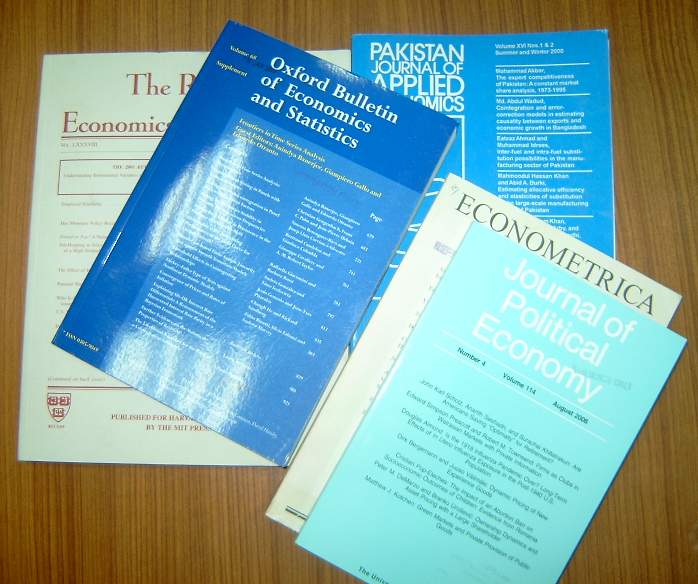
Do Journals still need issues, pages, volumes and impact factors?

A lot of people may hate me for saying this. But I think the time for having a periodical journal has passed.

Journal: Created for a reason

Scholars and scientists needed a way to publish the result of their research. Originally they published their research as ‘letters’ to peers and colleagues. Then people thought that these papers needed to be published and disseminated more widely. The most cost effective way of doing it was packing ‘letters’ or papers in a discipline together. This made it more practical and viable and effective than sending letters to peers. It also made the discovery of new knowledge easier for the academic and scientific community. Physicists could subscribe to one or more Physics journals and they would know what their peers where doing.

By the time they published an ‘issue’, more papers would come in. It made sense to set a quarterly, monthly or weekly frequency to the publication plan. So they created ‘periodical journals’. After a few year, they decided that it would make sense to package all the research published in one year, in a single volume. This is how ‘volumes’ where created.

Reasons for journal structures

  • Papers (or research articles) were created to disseminate the outcome of research, a theory, a discourse, etc. In order to:
    • Claiming credit and intellectual property for the research
    • Inform peers of what had been achieved, to reduce duplicate efforts
    • To advance the science, so others could build upon the achievements and discoveries
  • Journals were born to:
    • Create a vehicle for effective dissemination of these paper
    • Generate economy of scale for wider access to the outcome of research
    • Create an official record for the papers published
    • Enable a peer-review process to ensure the research published still stood after scrutiny and was reproducible
    • Make research in a discipline or field more discoverable
    • Improve availability of the research in the discipline available to the community as soon as possible, by creating a ‘frequency’ of publication.
    • To enable ‘citation’, so others could have a common way of referring to the content of each paper.
  • Issues were born because it wasn’t viable to publish one paper at a time and it made sense to pack a few papers together and then print them
  • Volumes were created to package all the research published in a calendar year for ease of archiving.

Therefore, a journal was a ‘periodical’, ‘printed’ ‘package of content’ around a ‘specific scientific or scholarly discipline’, which followed a quality assurance process. The publishers released the journals in ‘issues’ and ‘volumes’. All good.

Journal reinvented: Henry Oldenburg arrives in 2016

Henry Oldenburg (1619 - 1677). Founder of the Royal Society, the first editor of the journal Philosophical Transactions, and the creator of peer review.
Henry Oldenburg (1619 – 1677). Founder of the Royal Society, the first editor of the journal Philosophical Transactions, and the creator of peer review.

Henry Oldenburg was a founder of Royal Society and Philosophical Transactions (the first scientific journal). He was also the creator of scientific peer-review. Imagine Oldenburg sat in a time machine and arrived in 2016. Would he still create Philosophical Transactions the way he did?

Seeing the power of the Internet, he would probably find a different, more effective solution to his problem. He wouldn’t probably even consider print as the medium and would use the web as a way of publishing scientific discoveries. Our Henry would still need some sort of peer-review process so people could trust the discoveries. He would need a brand name, to create trust around the published material and the quality assurance processes. Philosophical Transactions would still sound like a good name, probably.

No periodicals

However, it wouldn’t probably even occur to him to create a periodical, with ‘issues’ and ‘volumes’, use page numbers for citation, or even create articles in a PDF format. He would probably find the concept of an ‘Impact Factor’ for his efforts a bit absurd. It would have been the impact of the research paper that mattered, rather than the ‘publication’.

He would probably create an online platform, underpinned by a strong taxonomy, semantically enriched. Its name would probably not include the word ‘journal’. And the name of the communications would not be ‘papers’ or ‘articles’. He would know that the narrative and the ‘written’ content about a scientific discovery was only part of the communication. There were so many other elements — such as the underlying raw data, videos of the experiment, protocols and methods, peers’ views, etc. These, together with the text, would form the scientific communications, and would probably call them ‘research objects’.

He would use that single platform for publication of all natural and social sciences. The robust process for production, quality assurance and publications would be the same for all disciplines. He would not need to create thousands of niche journals in order to facilitate the discovery of content. Instead, He would use his taxonomy of science. As a result, anyone looking to find a specific communication in a discipline or wishing to know of the latest discoveries in a discipline, would go to Philosophical Transactions, choose their topic (or simply use the search engine).

He would not create ‘Issues’ or ‘volumes’, since it would be more important to place that research object into a net of related research rather than articles that happen to be submitted at the same time.

But we are still sticking to ‘journal’

However, today, we still have ‘journals’, ‘papers’, ‘issues’, ‘volumes’ and impact factors. Millions of dollars and years of investment in the development of mega-platforms and fundamental transformation of the STM and SSH publishing industry, and we still have them.  Everyone knows they don’t need to be there anymore, but they are still there. Every platform development uses them as the basis of the design. The industry spends thousands of hours to publish issues on time with sufficient page counts. Publishers aspire for digital first workflows, but they still commission typesetters to create PDFs before the html version of the articles. People are still talking about ‘page budgets’.

Someone needs to be a bit more daring and just try it differently, I guess. I mean, just make sure you have got the right taxonomy and ontology. Publish articles under the right subject terms, whenever they are ready. Just forget about ‘issues’, and focus on discovery and semantics. Forget about journal level metrics, and focus on article level metrics. And focus on creating research objects rather than research papers.

Scholarly journals and their future

M.Imran grants anyone the right to use this work for any purpose, without any conditions, unless such conditions are required by law.
Image in public domain

Modern day professional and learned societies were formed a few centuries ago to promote scientific discoveries and discourse as a whole. They were to represent and promote specific scientific and scholarly disciplines or professions and to champion advanced education of practitioners in those disciplines. It was immediately evident that deciding on a universal mean to keep a record and disseminate scientific findings was essential to the success of the mission of the Royal Society of London. Hence, the journal Philosophical Transactions of the Royal Society became the first journal in the world exclusively devoted to science. Societies also held conferences and seminars, educational courses and debate forums, but the scholarly ‘article’ or ‘paper’ soon became the cornerstone of science and its dissemination, and enabling discourse.

In the 21st century, the mission and function of professional and learned societies has largely remained the same. They champion their disciplines and professions, own journals, hold conferences, and provide leadership in academic and professional education. Societies’ maintained themselves (and still do) mainly (but not exclusively) through two revenue streams: Membership and their publications (be it scholarly and academic journals, monographs, textbooks, professional guidelines or other types of information).

Nothing has changed in terms of ‘what’ needs to be done, the main dilemma is ‘how’ it can best be done. Now people don’t seem to need a physical venue and a set date in the calendar year to get together and discuss common interests. All you need is a social network account, and you are on course to discuss your ideas, promote your work or influence others.

Journal publishing has also undergone change. From print issues of a journal who were sold to institutional libraries, we have reached a point where the basic concept in journal publishing are fading away: What’s the point of an ‘issue’ or ‘volume’ anymore now that we have DOIs? What’s the point of printing a journal when access, discovery and usage are mainly digital? What’s the meaning of a ‘paper’ or ‘article’ when research itself has moved beyond the concept of a contained piece of information? When and where are the concepts of intellectual property and copyright (which commercially rewards the creation and dissemination of scientific output) meet the concepts of open science, open source and open access?

And most importantly, how can societies and associations survive the increasing pressure from their members to increase the value of membership without any real and proportional increase in their revenues, the need for continuous investment in their digital technologies, and the fact that anyone can launch a journal in their discipline in a blink of an eye?

Publishing has become a gigantic business. Digital technologies which initially were thought to democratise publishing have become so fast moving that a society with its small revenue from membership cannot compete with large publishers in investing in new technologies. The number of scholarly and scientific articles published has increased so exponentially that academic libraries cannot balance the demand for scholarly communications and their limited subscription budgets. They want to acquire the most number of articles at the lowest cost possible. Therefore, they have focused their resources on subscribing to platforms of a handful of publishers who produce the highest number of articles, and they champion ‘open access’ so their academics can get access to the information they need at no cost to the library.

A large number of learned or professional societies, therefore, have reached the inevitable conclusion of partnering with one of the large publishers in order to both benefit from their investments in digital technologies and their access to the market. Publishers also need societies, their prestige, their well-established journals, and the trust they have gained among academics. So a natural alliance between societies and commercial publishers has resulted in various partnership models, from profit-share to a royalty system.

The dilemma of partnership

Shared interests, various options, problem solved. But nothing is that simple. Societies own the journals and almost all partnership models between societies and their publishers grant full strategical and editorial control to the society. The publisher mostly acts as a service provider and an agent. This means that the publisher designs its service based on the demands of the partnering society which does not always match the needs of the scholarly community. Many societies still want traditional issues and even print copies of their journals and a very focused scope. This is in contrast to the general trend in scientific communication, where

  • digital has replaced print
  • ‘research object’ [a combination of scientific findings and all the data and tools and meta-information resulting in that finding are available to the user is replacing ‘research paper’
  • DOIs and URIs are complementing, and maybe eventually replacing traditional forms of citation
  • semantic web, big data and linked data are replacing indexes and ‘fame’ for discovering content
  • journal level metrics are being replaced by article level metrics.
  • ‘Journals’ are losing their authority, with the authority of the ‘research objects’ and their creators rising.
  • The value of the Impact factor is strongly being debated
  • Mega-journals are taking over from niche journals
  • The structure of the ‘editorial office’ and the concept of peer review is changing ton support scale
  • Authors are replacing institutions as the main market for societies and publishers
  • the sustainability of the open access model is largely dependent on quantity rather than quality

If societies and publishers do not change the paradigm of their relationship from service-provider/customer to partner/partner, publishers will hesitate in embracing the new world of scientific communications. They are largely dependent on their ‘society partners’ and their satisfaction and see them as ‘clients’ rather than ‘partners’. Societies, on the other hand, will not benefit from capabilities of their publishers in investing in the way technology is being used to disseminate scholarly content (because they wish to retain control over how their journals are published).

The fact that the contract between a publisher and society almost always has a finite term (5-10 years) doesn’t help. Societies, driven by the justified and legitimate need to maximise their financial performance and to be accountable to their members, usually seek the best financial deal close to the expiration of the term of their agreement with their publishers. This means that every five years (or however many years depending on the contract), a better financial offer from another publisher may result in the journal being uprooted and replanted in a new platform. With this divorce most of the intangible learnings, the ‘experience effect’ and value of the relationship with their existing partners dissapears. The journal will have to start from scratch in many ways. It will still have its brand and other intangible attributes, but it needs to adapt itself with the new publisher’s roadmap, tools and way of working and like any new relationship, invest heavily in a new learning curve which sometimes could become quite costly.

After financial performance, the next main factor that could influence a society’s decision to choose a publisher is their marketing activities and spend and publishers usually enter a bidding game in marketing: Who spends most on marketing, and more importantly who meets the demands of the society on how the marketing budget is spent. I’ll talk about marketing for journals separately, but negotiations between societies and their publishing partners need to immediately shift from ‘how’ to ‘what end’; from ‘which conferences to attends’ or ‘what advertising to place’ to what ‘outcomes’ the society and the publisher are aiming to achieve. And when you start thinking about objectives and outcomes and start working your way backward, you may not end up spending a fortune on attending niche conferences in all corners of the world and instead you may channel your marketing resources on achieving measurably high impact, influence and reach for the journal, you may spend your money and time on building the largest possible audience from your target market using your digital platforms and channels. This can only be done if both sides truly embrace the spirit of a partnership with a shared goal.

Societies should look for the best financial deals or not move to a new publisher if they are not satisfied by their current publishers’ services. But they should also take into account various factors, including the value of their existing partnership. A real joint ownership of a journal by a society and a publisher empowers both sides to start thinking differently and embrace new ways. Societies should start seeing their publishers as true partners. More importantly, they should see other societies published by the same publishers as partners too. Imagine that a large publisher with established access to the market, partnering with 1000 societies forming an enormous organic community of scientific and scholarly publishing. Each society brings the prestige, the discipline and the domain knowledge to the table, and the publisher offers significant investment, access to market and know-how to this mega-partnership. This can drive change, and make the world a better place for societies, publishers, scientists and scholars, and science.

Digital First: Publishing for multiple outputs

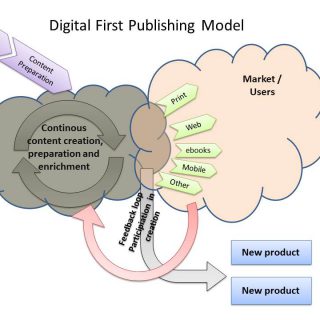
Publishers have adopted a Digital First strategy for more than 20 years now. When they started receiving MS Word files from authors and used those files as a starting point for the editorial and production process, they virtually adapted a Digital First strategy. However, until now the aim of the publishers has been to reach the best quality and standard for the books they publish, in print. Since the increase of the usage of ebook with the launch of e-readers, publishers have been thriving to find ways to convert the print editions of their books into ebooks. Ebooks have been usually considered as a ‘secondary’ format, with print keeping its position as the ‘primary’ format. It’s not unreasonable. Even today the majority of a publisher’s sales are arise from the print editions of their books, with ebooks having a modest share of 5-10% of the market. Publishers have a large database of the backlist, usually in the format of PDF files if they are lucky; but they also have a backlist of titles in various obsolete formats: They have them on paper, or even in some occasions on printing plates.

However, the market trends are changing. The ebook sales are growing and it wouldn’t be surprising if the ebook sales overtake the print sales. Write or wrong, this is the direction the market is moving in, and publishers can either embrace change and become part of it, or resist it and perish.

But the question is how to embrace the change. I’m not talking about the backlists here, as though necessary, it requires establishing a separate strand of work. We are talking about the future here, as change is about the future. You can’t change your past.

[Read more]

What is an ebook? What is a book? What does reading mean anymore?

Reading
Gerrit Dou [Public domain], via Wikimedia Commons
We hear about mobi files, ePubs, various platforms, Amazon Kindle, Google Play, iTunes, B&N’s Nook, Kobo… Ebook library aggregators such as MyiLibrary, ebrary or Netlibrary, each demanding different sets of data, each distributing on their own terms and conditions and dictating their own business models and producing reports in whatever way they want. How many formats and platforms the poor production and sales teams have to deal with?

Ebook: definition

Oxford Dictionaries defines ebooks as [1] ‘an electronic version of a printed book that can be read on a computer or handheld device designed specifically for this purpose.’ and [2] ‘ a dedicated device for reading electronic versions of printed books.’

Oxford is great! But I’m afraid both definitions are wrong. 50 shades of Grey, the bestselling novel of 2012, appeared as an ebook without a print counterpart and the print edition was only published after the ebook had already reached its high sales. There are thousands of ebooks published every week that may never have a print version, and the trend shows that we should expect more and more ebook-only editions of a book.

The Oxford Companion to the Book offers another definition: ‘An electronic book (variously, e-book, ebook, digital book, or even e-edition) is a book-length publication in digital form, consisting of text, images, or both, and produced on, published through, and readable on computers or other electronic devices.’

Well, this seems to suggest a better understanding of the concept, but it’s not complete. An ebook is not only about text and images; it’s a package for any digital media such as audio, video, and interactive graphics. Some ebooks don’t contain texts at all; they just include images and voice. It’s not about text, it’s about concept. And something else is missing from the definition above: ‘interactivity’, one if the core features of books, including ebooks.

If we take a step back and look at the definition of books, we usually see something like: ‘A set of written, printed, illustrated, or blank sheets, made of ink, paper, parchment, or other materials, usually fastened together to hinge at one side. A single sheet within a book is called a leaf, and each side of a leaf is called a page,’ (Wikipedia) or ‘a written or printed work consisting of pages glued or sewn together along one side and bound in covers’ (Oxford Dictionaries).

Well, as you can see, even the definitions of books don’t succeed in defining the concept of the most important medium for transfering knowledge in human history. That’s why the definition of ebooks gets confusing.

So, I’m going to offer another definition:

‘A book is a transferable, portable, standalone and interactive package of readable knowledge employing any of the various forms of media, including words, sounds, and static, moving or interactive images. It can be produced or reproduced on physical objects such as paper sheets, or in digital form’.

And therefore,

‘An ebook is simply a book that is produced in digital form.’

Even a physical book is interactive. You can write on it!

The word ‘readable’ differentiates books from other mediums such as films and music (not notes, which are readable’), but we should be careful not to attribute the verb ‘reading’ to written word only. Audio books are not ‘written words’ (although they are based on written words. Children picture-only books don’t have any kind of written word in them and all the knowledge is transferred via images. If we look at the definition of reading, there is no mention of written word, although written word is currently the most common mean for facilitating the act of reading:

‘Reading is a complex cognitive process of decoding symbols in order to construct or derive meaning. It is a means of language acquisition, of communication, and of sharing information and ideas’ (Wikipedia).

‘Decoding symbols’ is the core component of the act of reading, and differentiates books from movies. In movies you are not ‘reading’, you are ‘watching’.

I have used the word ‘knowledge’ in the definition of books rather than ‘information’ to differentiate it from other forms of packaged content, such as advertising pamphlets. But the old criteria of attributing a minimum size for something to be called a book, no longer applies. If a research paper is published as a standalone package of content, then it’s a book. If it is published alongside in a collection of articles in a periodical or another ‘book’, then it’s not a book. If package of knowledge is published periodically under the same name, then it is not a book and it’s a periodical. If the package of content can live on its own without sharing its name (the main name of the product) with other publications in a series, then it’s a book.

The reason I’m having these discussions before tackling the practical aspects of producing and selling ebooks, is that I believe until the publishers, authors, editors, and readers change the way they look at the concept behind the products they are developing, they can’t possibly come up with a strategy, and therefore everyone just needs to go with the flow determined by retailers such as Amazon and Apple, who are currently dictating the product models for ebooks in the market.

In the next posts I will start talking about ebook formats and the necessity of Digital First.