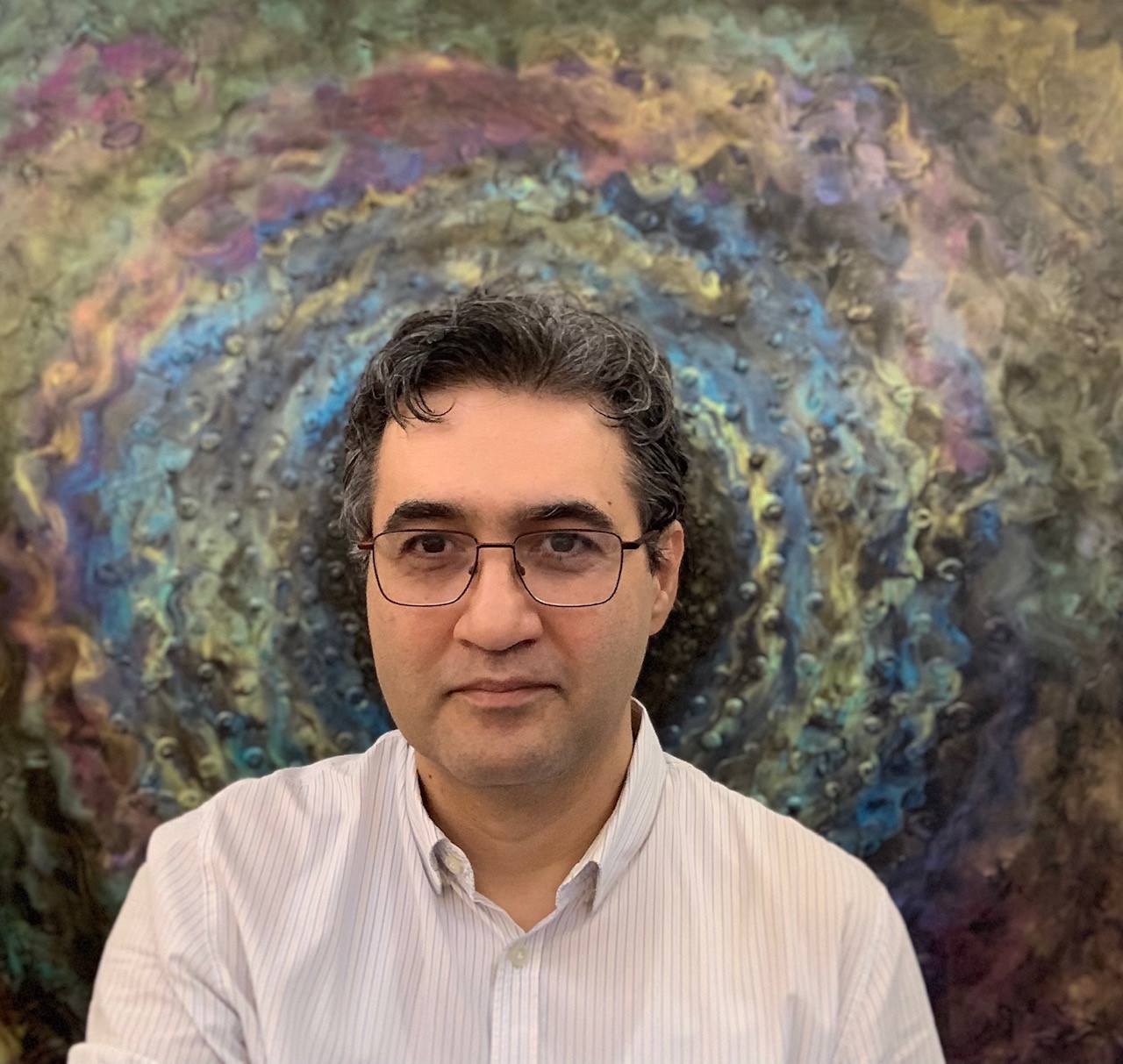
Paulo Coelho: [The Gaze of the Gazelle] an Important and Life-Affirming Memoir

On 20 June 2009, a brief video clip was circulated all over the world. It showed the death of a young, unarmed woman called Neda, who had been shot in the chest while taking part in a protest in Tehran and was bleeding to death on the street. Few images in the contemporary world have had such an instant and powerful impact. This footage was so intense it raised the awareness of the world on what was happening in Iran and forced world leaders to condemn the way the Iranian government was treating its citizens.

For me, however, it was more personal. There was a young man in the video trying to save Neda. He was my friend, Arash.

When I met him for the very first time, I could never have imagined that this slim young man would get caught in the crossroad of history ten years later. Even if I had the power to look into the future and see that this passionate doctor-publisher-author was destined to be present in one of the most important documents of contemporary history, I couldn’t have imagined the way he would react to it. I couldn’t have imagined that he would have the courage to testify against an unspeakable crime, and be prepared to forsake everything to expose the truth.

I met Arash in Tehran in 2000 when I visited Iran. Arash was the Iranian publisher who, despite the fact that Iran has not signed up to any of the international copyright agreements, had made the decision to publish my work with my authorisation.

I was in a state of confusion when I met him. Finally I was in Iran, and while I had been looking forward to visiting Iran for some time, I had no idea what to expect. I didn’t know what the implications of my visit were going to be, or if Christina and I were in any kind of danger. However, I had made the decision to venture this visit; I already knew that I had thousands of readers there waiting for me and I was ecstatic at the thought of seeing the land of Rumi, Saadi, Hafiz and Omar Khayyam.

Read the rest of the article here

Two feedbacks from Italian readers of The Gaze of the Gazelle (Negli occhi della gazzella)

Your book hit my the soul…

Sorry but I write with translator, my name is Romina, I am writing from Italy (ancona-marche). I read the book In the Eyes of the Gazelle (the Gaze of the Gazelle: Negli occhi della gazzella), it was so beautiful!
I tried to understand better what you meant, jihad, Basij, imams, mullahs, jinn, Shari’a, Tudeh and other terms … I have seen many pictures, women with hijab, your wonderful mountains, the lights of Tehran in the evening, the moon, the stars, Iran is really a beautiful world!
I found pictures of Neda when she died, and I have them saved on my PC, sometimes I look at those beautiful eyes that only the Iranian women have … Her smile is forever caught in the middle, then it’s your book, which hit my soul, I would like to thank you for the gift that you gave me, your story, your writing about your life, your emotions … I can never forget!
I thank you very much for what imprinted on my heart!
I’m talking to my friends about your work, I would like to share this excitement with them!
I hug you my friend!
with great affection
Romi

Thank you for making me appreciate my freedom…

Thank you Arash, I want to thank you for making me appreciate my freedom to be and do whatever I want and feel. Thank you for letting me know lot of things about your beautiful country. Thank you for letting me know about the story of your country, of its culture through the innocent but critic eyes of a little smart boy, of an adolescent and of a young man as you was and I am. Thank you for letting me knowing Neda, the Voice of freedom. Last but not least thank you for letting me cry, on a plane, reading the last page of your beautiful book “The Gaze of the Gazelle” just few hours ago, reading words of hope for the present.

Nothing personal just wanted you to know how much you impressed me with your words. Again thank you

Damiano


s

Your book hit my the soul…

‘You don’t deserve to be published’ Book censorship in Iran

Citation: Hejazi, Arash, ‘You don’t deserve to be published’ Book Censorship in Iran, LOGOS: The Journal of the World Book Community, Volume 22, Number 1, 2011 , pp. 53-62(10), DOI: 10.1163/095796511X562644

‘Read the rest of the article in PDF here: ‘You Don’t Deserve to Be Published: Censorship in Iran’

Censorship is as old as human intellect. It has been practised in almost every country at some level throughout history: from 399 BC, when Socrates was forced to drink poison, to the horrors of the Inquisition, and the oficial coining of the concept with the publication of Index Librorum Prohibitorum by the Roman Catholic Church; from the obligation of English publishers to register their books with the Stationers’ Company in the 16th century until the case of D. H. Lawrence’s Lady Chatterley’s Lover; and the Nazi book-burning campaign and the absolute offfijicial control of the governments of the USSR, China, and Eastern European countries over published material.
Continue reading ‘You don’t deserve to be published’ Book censorship in Iran

International Publishers Association Calls for the Immediate Release of Publishes List of Arrested Iranian Journalists, Publishers & Writers

Source: International Publishers Association
Geneva, 31 July 2009
Following the massive wave of arrests targeting bloggers, journalists, publishers and writers, the International Publishers Association (IPA) publishes a list of some of those under arrest (see Note for Editors), and demands their immediate release.
IPA also calls on the Iranian authorities to drop the investigation of Arash Hejazi, the publisher who provided the first aid to Neda Agha-Soltan, killed during the street protests on 20 June 2009.
Publisher Arash Hejazi (Caravan publishing) is pictured on video trying to help 26 year old Neda Agha-Soltan during her last moments. On 29 June 2009, Mr. Ahmadinejad called for a probe into Neda’s “suspicious” death, and sent a letter to judiciary chief Ayatollah Mahmud Hashemi-Shahrudi requesting a serious investigation to help identify “the elements” behind Neda’s killing. A few days later, Iran’s police chief, Ismail Ahmadi Moghaddam, declared that Arash Hezaji, Paulo Coehlo’s publisher in Farsi, who was present at the death of Neda during opposition street protests in Tehran, was under investigation by both Iran’s Ministry of Intelligence and by the international policy agency (Interpol). Since then, Interpol has denied any knowledge of the case.
Bjorn Smith-Simonsen, Chair of IPA’s Freedom to Publish Committee, declares: “A climate of terror has taken over Iran since the 12 June elections. Massive arrests have been targeting journalists, bloggers, writers and publishers as a way to stifle freedom of expression. Ahead of Iran’s review by the United Nations Human Rights Council, IPA is urging the Iranian authorities to release immediately all the journalists, bloggers, writers and publishers who have been engaged in non-violent demonstrations, thus exercising their right to freedom of expression. In addition, IPA is also calling on the Iranian authorities to drop the investigation of Arash Hejazi, the publisher who provided the first aid to young Neda, killed during the street protests on 20 June”.

Iran is now being described as the second largest prison for journalists worldwide following the wave of arrests among the intellectuals, including publishers, since the June street protests. The following is a list of named arrested journalists, writers, and publishers since the protests of last month:
Ahmad Zeidabadi – Journalist
Maziar Bahari – Journalist
Said Leylaz – Journalist
Homa Rousta – Actress
Jila Bani Yaghub – Journalist
Issa Saharkhiz – Journalist
Keivan Samimi – Magazine Publisher
Abdolreza Tajik – Editor
Mojtaba Pourmohsen – Journalist
Mehdi Khazali – Publisher (Hayyan)
Kambiz Norouzi – Secretary of the Legal Committee of the Iranian Journalists’
Association
Alireza Beheshti – Editor in Chief (Kalameh Sabz newspaper)
Shokoufeh Azar – Journalist
Behzad Basho – Cartoonist
Hengameh Shahidi – Journalist
Mahsa Amrabadi – Journalist
Masood Bastani – Journalist, Blogger
Misagh Bolhasani – Poet
Mohammad-Reza Yazdan Panah – Journalist
Majid Saidi – Photographer
Satiar Emami – Photographer
Said Movahedi – Photographer
Mehdi Zaboli – Photographer
Shadi Sadr – Journalist
Arash Hejazi – Writer, Publisher (Prosecuted)

Iranian Authors: is there a new voice being created?

Although translation plays an important role in Iranian book market, the local authors are very significant among the Persian readership. Contemporary classics such as Sadeq Hedayat (although completely forbidden since the Ahmadinezhad administration), Mahmood Dolatabadi, Sadeq Choobak, Hooshang Golshiri and the others are read with huge popularity among Iranians. The new generation of Iranian authors, not widely translated yet, are facing the dilemma of reconciling the creative process and the censorship, which seems almost impossible and has resulted in a lot of cheap literature, but in a few cases – by the laws of Necessity is the mother of invention and Practice makes perfect – has resulted in the creation of new voices and styles – especially by female authors – whichseems to be most appealing to the readers.I sometimes refer to this new trend in Persian Literature as “return to the source”, as itseems to me that the Iranian authors are returning to the world wide known tradition of storytelling of their ancestors, Rumi, Firdowsy and Khayam and the authors of 1001 nights,more being said with less words, believing that what you see is not what you get, and creating huge intratextuality and mysteries. Authors like Shahrnoosh Parsipoor, Mohammad-Reza Kateb, and Mohammad Mohammad-Ali and some others are the highlights.

Perhaps we have to make a bridge, the publishers from many parts of the world can learn from us how to survive, despite all the problems that may seem coming out of a book by George Orwell, far away from the problems of bestsellers and profits. We can learn some business from them.

This is why I always fly to Frankfurt in October.