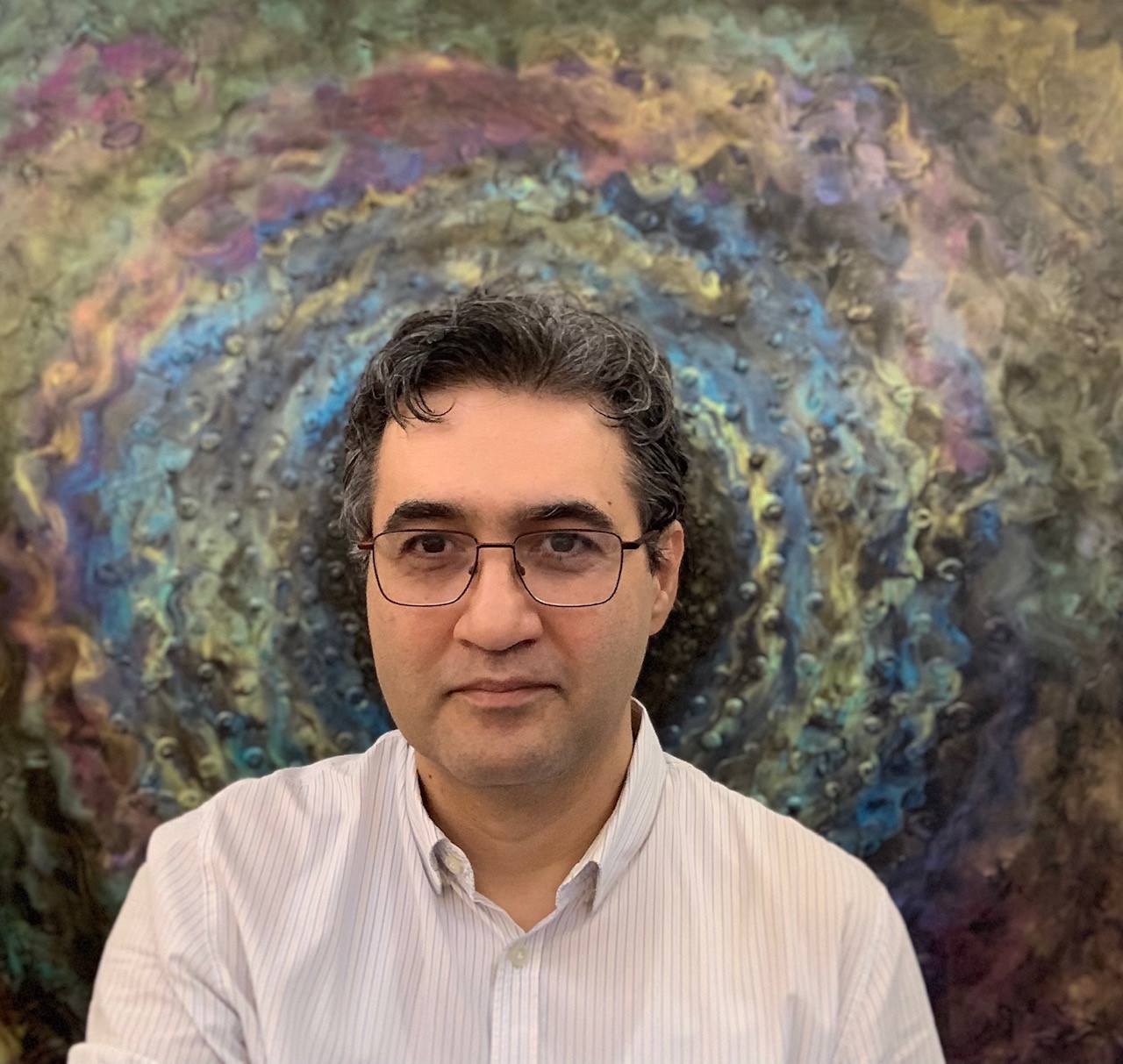
Paulo Coelho: [The Gaze of the Gazelle] an Important and Life-Affirming Memoir

On 20 June 2009, a brief video clip was circulated all over the world. It showed the death of a young, unarmed woman called Neda, who had been shot in the chest while taking part in a protest in Tehran and was bleeding to death on the street. Few images in the contemporary world have had such an instant and powerful impact. This footage was so intense it raised the awareness of the world on what was happening in Iran and forced world leaders to condemn the way the Iranian government was treating its citizens.

For me, however, it was more personal. There was a young man in the video trying to save Neda. He was my friend, Arash.

When I met him for the very first time, I could never have imagined that this slim young man would get caught in the crossroad of history ten years later. Even if I had the power to look into the future and see that this passionate doctor-publisher-author was destined to be present in one of the most important documents of contemporary history, I couldn’t have imagined the way he would react to it. I couldn’t have imagined that he would have the courage to testify against an unspeakable crime, and be prepared to forsake everything to expose the truth.

I met Arash in Tehran in 2000 when I visited Iran. Arash was the Iranian publisher who, despite the fact that Iran has not signed up to any of the international copyright agreements, had made the decision to publish my work with my authorisation.

I was in a state of confusion when I met him. Finally I was in Iran, and while I had been looking forward to visiting Iran for some time, I had no idea what to expect. I didn’t know what the implications of my visit were going to be, or if Christina and I were in any kind of danger. However, I had made the decision to venture this visit; I already knew that I had thousands of readers there waiting for me and I was ecstatic at the thought of seeing the land of Rumi, Saadi, Hafiz and Omar Khayyam.

Read the rest of the article here

Iran, Tunisia, Egypt… What’s next? Time up for dictators?

In the last three years, from 2009 to 2011, several uprisings against dictatorships around the world have happened [namely: Iran, Tunisia, Egypt, Jordan, Yemen, Niger, Thailand and Sudan] with different outcomes. But this does not change the fact that it seems that the people living under dictatorship and totalitarian regimes are fed up.  While some of these oppressive governments have been supported by the Western countries, these changes show that apparently there is no room for dictators in the new century. The course of history is determining a new direction for countries suppressed fiercely in the past century. We have to wait and see if the people will be successful in establishing new democracies, or if the Western countries will take these changes seriously or still ignore them and try to continue working with and supporting the dictators.

In all these countries, the ruler controls all the media outlets, there is no freedom of speech, elections are controlled by the same people who are eventually elected, and any kind of opposition is suppressed. How else, the people can show their contempt for the rulers and their desire for freedom and democracy? Their only way is to protest in the streets, which is usually brutally suppressed by the rulers and the free countries just frown upon the brutality. What is going to happen to these people? Who is going to support them? How are they supposed to achieve their freedom, when even by sacrificing their lives, nothing changes?

Iran

In June 2009, after the widespread fraud in Iran’s presidential election during which the incumbent president, Mahmoud Ahmadinejad, was re-selected (not elected) as the president of Iran, large street protests started and lasted for several months. He claimed that he had received 63% of the votes, whereas the people believed that his main rival, Mir Hussein Mousavi was actually the person who had received 63% of the votes.

Iran has been ruled by the totalitarian Islamic regime since 1979. At the beginning of the protests, people only wanted the ballots to be recounted, as almost all were sure that their votes had been rigged. The regime ignored all the complaints from the competing presidential candidates and on June 19, the Supreme Leader publicly announce that those who continue the protests, would be responsible for the consequences, which turned out to be murder, torture, rape and imprisonment. The protests continued, during which, hundreds were shot by the plainclothes police and militia, several were ran over by the police cars, and tens died afterward from the injuries caused by the anti-riot police and the Basij’s batons. More than four thousand dissidents and protesters were arrested, tens of which died in detention centres under torture, and there were documented reports of prisoners being raped during interrogations. The government started blaming all the turmoil on the West and Israel, and did not acknowledge the fact that by their latest activities, they had turned the demand for recounting the votes into a widespread hatred towards the whole regime. Now people were not looking for their votes anymore and were targeting the Supreme Leader, as the unifying symbol of the regime. The Islamic Republic did not back off. They crushed the protests with all their might and ignored all the pledges from various international bodies for observing human rights.

Tunisia

Zine El Abidine Ben Ali became the President of Tunisia on 7 November, 1987, and was in power for 23 years, until 2011. In October 2009, the latest presidential elections in Tunisia were held and a Human Rights Watch report called it “an atmosphere of repression”. Ben Ali faced three candidates, two of whom said they actually supported the incumbent. No independent observer was allowed to monitor the vote, and Ben Ali won a landslide victory, with 89.62%. His opponent, Mohamed Bouchiha, received 5.01%. The candidate who was most critical of the regime, Ahmed Ibrahim, of the Ettajdid party, received only 1.57% after a campaign in which he was not allowed to put posters up or hold any kind of meeting.

In January 2011, though, the people’s protests showed that Ben Ali did not enjoy the support of nearly 90% of the voters. The demonstrations and riots were reported to have started over unemployment, food inflation, corruption, freedom of speech and poor living conditions. The protests led to the ousting of Ben Ali, who stepped down from the presidency and fled Tunisia on 14 January 2011 after 23 years in power.

Egypt

Following the assassination of President Sadat in 1981, Hosni Mubarak became the President of the Arabic Republic of Egypt, and the Chairman of the National Democratic Party (NDP). He has now been in power for 29 consecutive years.Mubarak has been re-elected by majority votes in a referendum for successive terms on four occasions: in 1987, 1993, 1999. No one could run against the President due to a restriction in the Egyptian constitution in which the People’s Assembly played the main role in electing the President of the Republic. After increased domestic and international pressure for democratic reform in Egypt, in 2005 the constitution was amended and it allowed multi-candidate presidential elections.  Previously, Mubarak secured his position by having himself nominated by parliament, then confirmed without opposition in a referendum. However, in the September 2005 elections, the electoral institutions, and security apparatus remain under the control of the President. The official state media, including the three government newspapers and state television also express views identical to the official line taken by Mubarak. On 28 July 2005, Mubarak announced his candidacy, as he had been widely expected to do. The election which was scheduled for 7 September 2005 involved mass rigging activities, according to civil organizations that observed the elections. Reports have shown that Mubarak’s party used government vehicles to take public employees to vote for him. Votes were bought for Mubarak in poor suburbs and rural areas. It was also reported that thousands of illegal votes were allowed for Mubarak from citizens who were not registered to vote. On 8 September 2005, Dr. Ayman Nour, a dissident and candidate for the Al-Ghad party – Tomorrow party, contested the election results, and demanded a repeat of the election. In a move widely seen as political persecution, Nour was convicted of forgery and sentenced to five years at hard labor on 24 December 2005.

Then, shortly after the uprising in Tunisia, the street protests started in Egypt. Thousands of people poured into streets, demanding Mubarak to abandon his position as the president. As there protests are still ongoing, we will have to wait and see the outcome. But whatever the outcome, this does not change the fact that Mubarak is not as popular as he believed.

Yemen

Ali Abdullah Saleh became the first elected President in reunified Yemen in 1999 (though he had been President of unified Yemen since 1990 and President of North Yemen since 1978). He was re-elected to office in September 2006. Saleh’s victory was marked by an election that was accompanied by violence, violations of press freedoms and allegations of fraud.

In the past few days, after the Tunisia incidents, thousands of students and opposition activists demonstrated at Sana’a University, calling, very directly, for President Ali Abdullah Salih to go, alluding to events in Tunisia.

Jordan

Jordan’s most executive power is the King. The King traditionally has held substantial power, and although the parliament can control his decisions, but it has rarely happened. The Hashemite dynasty has ruled over Transjordan and Jordan for 90 years.

King Abdullah II, witnessed the uprising of his people in January 2011. Bread and freedom” was one of the slogans, along with calls for the government to resign. Complaining about the king is still taboo in Jordan, so the protests focused on his ministers, even though it is the king who actually pulls the strings.

Kyrgyzstan

President Kurmanbek Saliyevich Bakiyev came to power in 2005, as the acting President after the downfall of President Akayev. Despite initial hopes, Bakiyev’s term in office was marred by the murder of several prominent politicians, prison riots, economic ills and battles for control of lucrative businesses. In 2006, Bakiyev faced a political crisis as thousands of people participated in a series of protests in Bishkek. He was accused of not following through with his promises to limit presidential power, give more authority to parliament and the prime minister, and eradicate corruption and crime.

Finally, in April 2010,  after bloody riots in the capital overturned the government, Bakiyev reportedly fled to the southern city of Osh.

Niger

President Mamadou Tandja held the power in Nigeria since 1990.  Following a constitutional crisis in 2009, which was caused by Tandja’s efforts to remain in office beyond the originally scheduled end of his term, he was ousted by the military in a coup d’etat in February 2010.

Thailand
The country is a kingdom, a constitutional monarchy with King Bhumibol Adulyadej, the ninth king of the House of Chakri, who has reigned since 1946, making him the world’s longest-serving current head of state and the longest-reigning monarch in Thai history.[7] The king is officially titled Head of State, the Head of the Armed Forces, an Upholder of the Buddhist religion, and the Defender of all Faiths.
As of April 2010, a set of new violent protests by the Red Shirt opposition movement, possibly backed financially by fugitive former Prime Minister Thaksin Shinawatra, have resulted in 87 deaths (mostly civilian and some military) and 1,378 injured.

Sudan

The Darfur Conflict is an ongoing civil war centered on the Darfur region of Sudan. It began in February 2003 when the Sudan Liberation Movement/Army and Justice and Equality Movement (JEM) groups in Darfur took up arms, accusing the Sudanese government of oppressing or committing genocide against non-arab Sudanese in favor of Sudanese Arabs. One side of the conflict is composed mainly of the official Sudanese military and police, and the Janjaweed, a Sudanese militia group recruited mostly from the Arab Abbala tribes of the northern Rizeigat region in Sudan; these tribes are mainly camel-herding nomads. The other combatants are made up of rebel groups, notably the SLM/A and the JEM, recruited primarily from the non-Arab Muslim Fur, Zaghawa, and Masalit ethnic groups. Although the Sudanese government publicly denies that it supports the Janjaweed, it has been providing financial assistance and weapons to the militia and has been organizing joint attacks targeting civilians.

Under international pressure, a referendum took place in Southern Sudan from 9 January to 15 January 2011, on whether the region should remain a part of Sudan or become independent. The referendum was one of the consequences of the 2005 Naivasha Agreement between the Khartoum central government and the Sudan People’s Liberation Army/Movement (SPLA/M).

As of 23 January 2011, preliminary results indicated a landslide of 98.8% voting in favor of independence.

Last Call for a New Blood: The disinterest of UK and US publishers towards books in translation and its implications

Arash Hejazi

Oxford Brookes University

Publishing and Language Issues

March 2009

‘I do not want my house to be walled in on all sides, and my windows to be stuffed. I want the culture of all lands to be blown about my house as freely as possible. But I refuse to be blown off my feet by any.’

Gandhi (1)

Introduction

Despite the importance of diversity alongside globalisation, English-speaking publishers have shown disinterest in publishing books in translation. 2–6% of all books published in US and UK are translations [(2) and (3)]; though no definite statistics are available to prove this statement, as Britain is ‘the only country in Europe that doesn’t produce any statistics on translation’, a fact that further proves the disinterest in translated literature (4). These estimations leave small space for any doubt about the situation, especially when compared to the rate in other European countries (Germany: 12.4%, Spain: 24–28%, France: 15–27% and Turkey: 40%) (5) and (6). Translations form a significant part of publishing and addressing this lack of interest in US and UK publishing seems important. There have been several surveys exploring this tendency, trying to emphasis on the significant differences between English-speaking publishers and other countries. Horace Engdahl, the secretary of the Nobel Academy has said, ‘the US is too isolated, too insular, they don’t translate enough and don’t really participate in the big dialogue of literature’ (7). Esther Allen, the executive director of Columbia University’s Centre for Literary Translation, calls this proportion ‘absurd’ (4).

However, there has not been a comprehensive study on the reasons and consequences of this attitude. In this critical review, the situation is addressed on two aspects: First, an effort to identify the underlying reasons that have led to this disinterest and secondly, exploring the necessity of translation and the consequences of ignoring it in the publishing industry.
Aetiology
1. Xenophobia and parochialism: translations don’t sell
Many sources claim that American and British readers are not eager to read translated books and translations don’t sell (8) and (7); the readers need works not ‘so specific to the place and culture in which it was written’ (3); or the ‘unpleasantly fetishist ring’ about the term literary translation (9) and the common dislike among Americans for things that are ‘too foreign’(10). Some refer to this as ‘cultural insularity’, ‘little England-ism’ or ‘cultural parochialism’(11). This leads to considering translations as ‘niche, which naturally results in low sales’(9). Others believe that the publishing environment ‘tends towards repetition and safety’ (12).

However, if this was the case, no foreign author, especially unfamiliar names like Khalid Hosseini, Marjan Satrapi, Azar Nafisi, Haruki Murakami or Aravind Adiga would have ended up on the bestseller lists. If the dazzling sales of these and many other works similar works has not changed this preconception, it doesn’t alter the truth that the English-speaking readership is curious and interested to read the literature from other cultures. It has been calculated that the success ratio of translations in US is ‘similar to, or better than, English-language titles’, and among those authors who are translated, there is a higher probability of becoming ‘household names’ than the American authors (8). Donald Keene, Columbia University professor, agrees, ‘American resistance to translations doesn’t mean they don’t sell’ (13). Some have attributed this disinterest to the ‘fundamental conservative’ attitude of the ‘buyers and booksellers’ (9). Furthermore, some authorities such as Suzie Dooré, fiction buyer at Waterstone’s, believe that nationality is not a big issue and people do not go into a bookshop ‘with the view that they don’t want translated fiction, they just want a good book’ (14).
2. High cost, low return
The higher costs include the following:
a. Translation costs and rarity of qualified translators (14) and (4),
b. Editorial costs (3),
c. Costs involved in acquiring rights(9),
d. Opportunity cost (3),
e. Time cost (15).
These expenses make publishing translations a ‘high-cost, low-return’ project (3) and (16) which means lower profitability and the need for ‘higher print runs that usually don’t sell’(11).
It is a face that translators are underpaid in US and UK (14) and ‘suffer from a lack of status’ (4). Therefore, the rarity and expense of qualified translators is natural (15). A job is created in response to a need. If the need is addressed, the qualified people will appear. Furthermore, part of this problem can be diluted in ‘relatively low advances’ paid for the rights of books in translation(11). Also, recently, more foreign publishers are willing to provide English-language publishers with translations of their offered titles, which can be improved by the efforts of a qualified editor. There are also a variety of grants, funding and subsidies available (11) provided by different organisations and embassies to support translations (17). Having said that, many of large publishers in US and UK are willing to accept extremely high origination costs for several projects and the small proportion of translation costs cannot be considered a financial burden, as it is not the case in the rest of the world.

3. Cultural imperialism and popularity of English
UNESCO quotes several writers who claim there is ‘a certain arrogance on the part of British and American publishing Houses which consider anything published in another language to be automatically inferior’ (3) and ‘fundamental arrogance of English as a language — and a lack of curiosity — when dealing with other countries’ (12).
Dominance of English language as the international communication language and also the ‘patronising’ attitude of English-speaking publishers toward foreigners and their culture were identified as another background factor (17). Publishers do not need translations to be considered international publishers, ‘they just have to bring authors from Canada, Australia and South Africa’ (3).
4. Globalisation and commercialism
As Globalisation is a phenomenon ‘driven by money and business, not by culture and curiosity’ (5), therefore, the appearing of publishing and bookselling conglomerations leads to more interest in profitability than in culture (10) where ‘every single title has to make a profit’(11).
5. Lack of foreign language skills among the editors
Some sources refer to the inability of most English-speaking editors to read in several languages, a problem that makes judgment ‘tricky’ (9) and (7). Moreover, the ‘poor’ system of language teaching in UK leads to ‘less study of works by foreign authors’ which ends in less interest in other cultures (11).
However, it seems that language knowledge of inhabitants of other European countries has been over-estimated. Today, under commercial pressure, many Europeans seem to feel that learning English is quite enough (17) and not every editor in Europe knows all the languages that they are commissioning translations from.

6. Lack of appropriate structure within the publishing industry
No department or editor in US and UK publishing industry is ‘solely and exclusively in charge of the acquisition of foreign books’ (10) and most publishers do not invest in discovering the current literature in other languages. There are no ‘mainstream, generalist, British literary periodical which publishes poems, stories, novel-excerpts and literary essays in translation on a regular basis’ (18).
On the other hand, retailers do not support literature in translation (19).

7. Saturation of the market with English-language books
Richness of choices available for publishers in the English language has ‘spoilt’ the publishers and they have become ‘less adventurous than they might be’ (14). Some publishers believe that there are so many talented new UK authors waiting to be published, which makes it hard to justify spending budgets on translations (9). In certain market sectors, the publishers’ preference to English language books is completely justifiable; however, in books that involve artistic creation, this cannot be the case, as each work of literature is unique and unrepeatable; therefore, looking in other languages is as important as supporting local authors.

8. Marketing issues
Marketing departments of US and UK publishers claim that publishing books by foreign authors, makes it difficult for publishers to ‘raise the profile of authors’ through publicity (9) which in leads to marketers claiming that ‘there is no market for translations’ (10).
There also seems to be a certain lack of interest among the press and media in covering the publication of a foreign book (14). Nonetheless, Anne-Solange Noble, the foreign-rights director at Gallimard in France believes that ‘American publishers do not support translated books with marketing budgets and then complain when sales fail to dazzle’ (7).

9. Tokenism
A whole national literature is written off after the publishers ‘do’ a couple of its writers in translation (17), for example, despite the success of Japanese manga, two Nobel prizes for Japanese authors and the success of Murakami, no publisher shows any interest to discover and publish other renowned Japanese writers (13).

The necessity of translation and implications of ignoring it

Having studied all the reasons for not translating, the first thing that may spring into the mind is: Then why one should be concerned? Is this really to be considered a ‘problem’? These two countries create the largest power in the world of publishing, much stronger than many other countries which ‘do’ translate books from other languages.

This section tries to identify the necessity of translation in every given country and culture, and also address some of the consequences of ignoring this necessity.

1. Intercultural influences vs. cultural isolation
The epic of Gilgamesh is one of the earliest written pieces of literature in the world (20). Ironically, it may well be one of the earliest literary translations too, as the standard version of this epic discovered in 1849, was a Babylonian translation compiled in 1300–1000 B.C. by am Akkadian scribe, based on of the Sumerian epic (2150-200 B.C.) (21).
The story reached Near East and was subsequently translated into other languages like Hittite and Hurrian, then reached Palestine and Anatolia and became available to the Ionian Greeks (22). This migration helped this epic influence several outstanding works composed later, ie. Iliad, Odyssey and Argonautica(23) and perhaps the story of the flood in Book of Genesis. Without the translation of this epic, perhaps many of the classical literary masterpieces would have not existed or would be completely different from what they are. Perhaps even the course of history would have changed and the western civilisation we know, based on two deep roots (classical Greco-Roman literature and Biblical lore) would be nonexistent.
It could be interesting if a research was performed to find out what would have happened if Alexander had not taken some of the scientific and literary works from the ruins of library of Estakhr in Persia to Greece and had them translated(24). Without adaptation, would Chaucer’s The Knight Tale (based on Boccaccio’s Teseida delle nozze di Emilia) or Roman de la Rose have been available to English world? Would Hamlet be created? Can ‘the impact’ Dostoevsky, Flaubert, Duras, Borges and Kafka be ignored (25)? Would English become such an influential language? How would British children have seen the world without reading the tales of the Brothers Grimm, Charles Perrault or Hans Christian Andersen? Patricia Billings, director of Milet Publishing asks, ‘why cut children off from stories and styles that they are eminently able to understand, interpret, appreciate and love? Why are the adults in the business acting as a barrier to this?’ (9). Philip Pullman (2005) believes that part of the ‘astonishing success’ of English language, is a result of growing out ‘of Latin and Anglo-Saxon and French and absorbing words from hundreds of other sources’ and Ye Weiqu, from the Chinese Institute of Social Studies describes literary translation as a ‘building of bridges’, that helps people of the world interact (26). Literature equips the reader with a ‘unique insight’ into the past and present of a culture, it is essential for intercultural and mutual understanding (Roche 2008) and ‘diminishes the risk of serious conflict based on prejudice’ (17). This is what Anne-Solange Noble called ‘the poverty of the rich’ when an American publisher in Frankfurt book fair 2008 described Jean-Marie Gustave LeClézio as an ‘unknown writer’ (7), while LeClézio’s book Désert, especially praised by the Nobel academy(27), had already been translated and published into 23 languages(28). It was translated into English in 2009, after the prize, while there are hundreds of other authors who have not had the privilege of winning the Nobel Prize and the English-speaking readers will remain deprived of their literature. Levisalles (2004) believes these countries to be ‘threatened by an extreme cultural isolation’.

2. Innovation vs. decline in quality
It seems that English literature is suffering from a certain lack of innovation, with hundreds of novels following the same pattern based on safe and tested templates and books from different societies and cultures can offer alternatives to ‘the formulaic fiction that has dominated’ the bestseller lists(29). ‘Diversity encourages innovation’ and ‘competition stimulates quality’ (Watts, 2007).
The resistance of the publishers and booksellers literature in translation may result in serious decline in the quality of English literary fiction. In England’s Premier League, foreign players lifted the standards of the league and they improved the English footballers (30).
3. Gateway to the world vs. Obsolesce of minority languages
English is the ‘lingua franca of the contemporary world’ with about 1.3–1.5 billion people speaking it as their first or second language (Roche 2008). Many publishers in many countries only have English as their gateway to world’s literature and can only read books originaly published in or translated into English. Having more books translated into English means international access to global cultural heritage.
In 2005, Crime Writers’ Association limited the Golden Dagger prize to authors writing in English. The Bookseller published an article stating: ‘By not allowing translated titles, the CWA will weaken the crime genre’ (30). Esther Allen believes that the dominance of English-language publishing is ‘putting other languages and literary cultures at risk’ (4). If Khalid Hosseini had written Kite-runner in Persian or Dari, he would have never attracted the attention of American or British publishers, as there are several brilliant Iranian or Afghan authors who may never find a chance to be translated into English.
4. An essential tool for international success vs. losing in competition
Exactly because of globalisation, learning about the culture and other people’s way of life is vital for the success of UK and US. This understanding can be obtained, not through travel guides or history books, but from first-hand contemporary literature of a nation, as ‘literature, even in translation, brings you closer to the soul of any given country or ethnic group’ and ignoring it can create a handicap that may prevent a country ‘to learn from beyond’ their national borders (17).

Furthermore, with the arrival of the digital age, the new concept of intellectual property and the unknown future of territorial rights, in a few years, international publishers can directly publish their books in English, make them available online and directly compete for the UK and US market(11). Ignoring the international literature only deprives the publishers from exploiting a market segment that most probably will be exploited by international publishers.

Conclusion: The future
The necessity of translation for a healthy publishing industry has been discussed and the possible implications of ignoring this necessity, makes it justifiable to address this situation as a problem in publishing industry. A few solutions have been proposed by authorities; however, none of the solutions can be successful without raised awareness towards the problem and recognition of the need to change the situation, especially among large publishing houses in the private sector. The main obstacle is that although publishers already know the situation, they do not act accordingly due to the idea of publishing translations not being financially profitable. Twenty years ago, large industries reacted the same way to the warnings against climate change and delayed taking serious measures until the main damage was done. The same goes for publishing literature in translation. With all the diverse ethnicities already inhabiting US and UK, a broad knowledge sufficient to be incorporated into the well-established publishing industry at an affordable cost already exists. It only takes a change in attitude and a certain readiness to accept a percentage of risk – which cannot be higher than the risk taken when deciding to publish any book – to take the first step towards solving this problem. It is only by leaving the safe and tested paths that we can discover that the world is not flat and the only way to India is not east.

Bibliography

1. Gandhi, Mahatma. All Men Are Brothers, Autobiographical reflections. [ed.] Krishna Kripalani. s.l. : Continuum International Publishing Group Ltd., 1997. p. 142. 978-0826400031.

2. Maczka, Michelle and Stock, Riky. Literary Translation in the United States:An Analysis of Translated Titles Reviewed by Publishers Weekly. Publishing Research Quarterly. Summer 2006, Vol. 22, 2, pp. 49-54.

3. The U.S. Translation Blues. Wimmer, Natasha. 21 May 2001, Publishers Weekly, pp. 71-74.

4. Lea, Richard. Lost: translation. guardian.co.uk. [Online] 16 Nov. 2007. [Cited: 22 Feb. 2009.] http://www.guardian.co.uk/books/2007/nov/16/fiction.richardlea.

5. Pullman, Philip. Still lost in translation. TESconnect. [Online] 23 Sep. 2005. [Cited: 27 Feb. 2009.] http://www.tes.co.uk/article.aspx?storycode=2137315.

6. Mulligan, Mark. Translations help balance the books – PUBLISHING: Mark Mulligan reads between the lines of the city’s enduring success as a publisher of Spanish and foreign literature. Financial Times. 13 Apr. 2005, p. 3.

7. Rich, Motoko. Translation Is Foreign to U.S. Publishers. The Newyork Times. [Online] 18 Oct. 2008. [Cited: 19 Feb. 2008.] http://www.nytimes.com/2008/10/18/books/18book.html?ref=review.

8. Selling…en Español. Deahl, Rachel. 2, 14 Jan. 2008, Publishers Weekly, Vol. 255, p. 4.

9. Owen, Joanne. Lots in translation: Joanne Owen, children’s book buyer for Borders UK, believes the time is right for UK publishers to publish more children’s books from abroad.(Children’s Book In Translation). The Bookseller. 19 March 2004, 5120.

10. Levisalles, Natalie. The US Market for Translations. Publishing Research Quarterly. Summer 2004, Vol. 20, 2, pp. 55-59.

11. Roche, Cristina Fuentes La. Literature in Translation: Why is it so Difficult to Enter the Anglo-American Market? Real Instituto Elcano. [Online] 13 Oct. 2008. [Cited: 23 Feb. 2009.] http://www.realinstitutoelcano.org/wps/portal/rielcano_eng/Content?WCM_GLOBAL_CONTEXT=/Elcano_in/Zonas_in/Spanish+Language+Culture/ARI124-2008.

12. An English obsession. Ariaratnam, Suresh. 7 4 2006, The Bookseller, p. 32.

13. Rutledge, Bruce. Beyond the Classics. J@pan Inc. Jul 2004, 57, pp. 34-38.

14. New wave in translation. Clee, Nicholas. 5171, 25 3 2005, Bookseller, pp. 26-27.

15. Marsh celebrates growth in foreign fiction. Horn, Caroline. 5162, 21 1 2005, Bookseller, p. 28.

16. Publishing Trends. International Bestsellers: Translation Salvation. Publishing Trends. [Online] Sep. 2006. [Cited: 18 Feb. 2009.] http://www.publishingtrends.com/copy/06/0609/0609int_TranslationSalvation.html.

17. Dickens, Eric. Selective Xenophobia and Literary Translation in Britain. Dalkey Archive Press. [Online] University of Illinoise, 2002. [Cited: 24 Feb 2009.] http://www.dalkeyarchive.com/article/show/219.

18. Offshore and Aloof. Dickens, Eric. 21, autumn 2005, ELM (Estonian Literary Magazine).

19. Bookseller. Booksellers ignore translations. The Bookseller. [Online] 30 Oct. 2008. [Cited: 19 Feb. 2009.] http://www.thebookseller.com/news/70037-booksellers-ignore-translations.html.

20. Darvill, Timothy. Gilgamesh, The Epic of. The Concise Oxford Dictionary of Archaeology. [Online] 2008. [Cited: 21 Feb. 2009.] http://www.oxfordreference.com/views/ENTRY.html?subview=Main&entry=t102.e1630.

21. Cooper, Lisa. Gilgamesh Epic. The Oxford Companion to World Exploration. [Online] Oxford University, 2007. [Cited: 2009 Feb. 21.] http://www.oxfordreference.com/views/ENTRY.html?subview=Main&entry=t230.e0283.

22. Gordon, Cyrus H. Gilgamesh Epic. The Oxford Companion to the Bible. [Online] 1993. [Cited: 22 Feb. 2009.] http://www.oxfordreference.com/views/ENTRY.html?subview=Main&entry=t120.e0287.

23. Odyssey and Argonautica. West, M. 1, s.l. : All Souls College, Oxford, 1 Jan. 2005, The Classical Quarterly , Vol. 55, pp. 39-64. 0009-8388 .

24. Mahloujian, Azar. Phoenix From the Ashes: A Tale of the Book in Iran. Iran Chamber Society. [Online] 2002. [Cited: 22 Feb. 2009.] http://www.iranchamber.com/literature/articles/tale_of_book_iran.php

25. Post, Chad. To Be Translated or Not to Be, PEN/IRL Report on the International Situation of Literary Translation, edited by Esther Allen. Publishing Research Quarterly. Jun 2008, Vol. 24, 2, pp. 143-144.

26. Books Are Silent Ambassadors:. Yoshizaki, Toyo. 4, Winter 2004, Publishing Research Quarterly, Vol. 19, pp. 31-36.

27. Nobel Academy. Biobibliographical Notes. Nobel Prize Academy. [Online] 2008. [Cited: 28 Feb. 2009.] http://nobelprize.org/nobel_prizes/literature/laureates/2008/bio-bibl.html.

28. Godine, David R. Desert. David R. Godine. [Online] 2009. [Cited: 28 Feb 2009.] http://godine.com/isbn.asp?isbn=1567923860.

29. Lost in translation? Watts, Daniel. 5273, 23 Mar. 2007, The Bookseller, p. 20.

30. They come over here, win our awards …. Bookseller. 5205, 18 Dec. 2005, Bookseller, p. 23.

31. Genesis, 11:6-9. The Bible. s.l. : English Standard Version.

32. Smith, Dinitia. A Crowd That’s Seldom at a Loss for Words. New York Times. 23 Apr. 2005.

33. First, Break All the Rules. Nelson, Sara. 43, 27 Oct. 2008, Publishers Weekly, Vol. 255, p. 5.

34. Optimism for books in translation. . Bookseller. 5052, 15 11 2002, Bookseller, p. 35.